By Godgift Harris
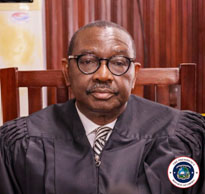
Justice Minister Oswald Tweh recently issued a stark warning to anyone using social media to post statements that could worsen tensions or endanger lives and property.
Twah warning comes amid the ongoing situation with Guinea, but said, anyone found posting comments detrimental to peace and tranquility between the two sisterly countries risked being arrested. Yet, government’s handling of the Lofa border crisis has raised questions about fairness, consistency, and selective justice.
Two individuals, Joshua Milton Blayee, widely known as General Butt-Naked, and Yekeh Kolubah, openly violated the minister’s directive.
Both made public statements on social media that carried the potential to escalate tensions and threaten national security, specifically on the border situation. Significantly, their actions were not hidden; they occurred openly in the very spaces the minister addressed. Despite this, the government response was markedly inconsistent, as Butt-Naked faced no official action, and authorities seemingly ignored his posts entirely. By contrast, Kolubah faced severe condemnation, with criticism coming from nearly every corner, with a handful defending the doctrine of free speech. The stark disparity in treatment has fueled public debate about selective enforcement and possible political bias in state institutions.
Observers suggest the difference may be linked to the individuals’ public profiles and perceived allegiances. Gen. Butt-Naked is widely associated with the Rescue Train Security, a group with notable recognition, while Kolubah has long been critical of sitting governments, including those he once brough to power. Critics argue that this selective targeting reflects hypocrisy, and undermines government’s claims of impartiality. Civic analysts stress that the issue is not about personal attacks, but governance and accountability. “If rules are applied selectively based on loyalty or influence, it erodes public trust. Citizens, regardless of political stance, deserve equal protection under the law,” said one observer. The case also highlights the challenges faced by opposition voices. Government officials often dismiss criticism as politically motivated, yet opposition members are citizens subject to the same risks, and responsibilities as any other Liberian. Unequal treatment in enforcement, not only undermines democratic principles, but also risks further division at a time when national unity is critical.
Experts have meanwhile, warned that inconsistency in applying the law could have lasting consequences.
“A nation divided against itself cannot stand,” noted one civic leader, invoking a familiar principle to underscore the need for fairness and cohesion.