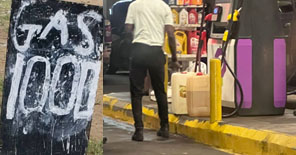
The latest increase in petroleum prices announced by the Ministry of Commerce and Industry in collaboration with the Liberia Petroleum Refining Company (LPRC) is already triggering widespread concern across Monrovia and beyond, with many Liberians warning that the decision could deepen the country’s already difficult cost-of-living crisis.
Recent official circulars have shown the government adjusting petroleum price ceilings in response to global market pressures and exchange-rate calculations.
Ministry of commerce and industry, under the new pricing regime, gasoline (PMS) now carries a wholesale ceiling of US$4.81 per gallon, while the retail pump price has been fixed at US$5.09 per gallon, or L$950.
Fuel oil (AGO), commonly used by commercial transport operators and businesses, has climbed to a wholesale ceiling of US$6.27, with the retail pump price now standing at US$6.55 per gallon, or L$1,225.
The revised structure reflects increases of US$0.22 on gasoline and a much sharper US$0.77 on fuel oil, a jump that many market observers believe could have an immediate ripple effect on transportation fares, food prices and the general cost of goods and services.
Although the Ministry has maintained that the pricing formula remains tied to the Central Bank of Liberia’s exchange rate of L$187 to US$1, many ordinary Liberians argue that the real burden will once again fall on consumers rather than regulators.
Across taxi ranks and commercial parking stations in Monrovia, drivers are already discussing possible fare increases, despite the Ministry of Transport’s existing fare guidelines.
For many commuters, the fear is not merely about fuel, but about the chain reaction that often follows such adjustments.
Public transport users say history has shown that fuel hikes almost always become a justification for drivers to raise fares beyond officially approved rates.
Even when fuel prices later stabilize, transport fares often remain unchanged, leaving passengers permanently burdened.
The sharper rise in diesel prices is especially troubling because diesel powers trucks, generators, and many heavy-duty commercial vehicles responsible for moving rice, cement, beverages and other essential commodities across the country.
This means the impact is likely to go far beyond the filling stations.
Many households are now bracing for another round of increases in market prices, especially rice and other imported essentials.
Although the Commerce Ministry recently reassured the public that it is working with importers to prevent a rise in rice prices, citizens remain skeptical, arguing that transportation and generator costs will inevitably push traders to charge more.
Ministry of commerce and industry, At Waterside Market, businesswoman JustinaFahnulleh expressed frustration over the persistent rise in prices.
“Things prices just increasing on daily basis, this is old wine in new bottle.
It means the past government and this current government are the same,” she said.
Her remarks reflect a growing public sentiment that successive administrations have struggled to shield ordinary Liberians from recurring economic shocks.
Critics said the latest increase once again exposes Liberia’s vulnerability to imported fuel dependence, weak market enforcement, and limited consumer protection.
Without strict monitoring of transport fares and commodity prices, the adjustment could quickly evolve into a broader inflationary wave, worsening hardship for low-income families already battling stagnant wages and high unemployment.
For many Liberians, the concern is no longer simply the cost of fuel at the pump, but the certainty that almost everything else may now cost more by the end of the week.