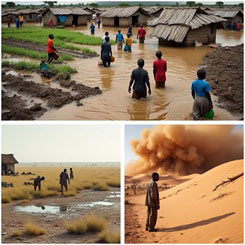
Global warming is one of the most pressing challenges of our time. It refers to the gradual increase in Earth’s average temperature, primarily caused by human activities such as burning fossil fuels, deforestation, and industrial emissions. This rise in temperature has far-reaching consequences that affect every aspect of society.
At the environmental level, global warming disrupts ecosystems. It melts glaciers, raises sea levels, and intensifies extreme weather events. As a result, communities face floods, droughts, and hurricanes that threaten both lives and livelihoods. This impact is particularly severe in vulnerable regions where infrastructure is weak.
At the economic level, global warming imposes heavy costs. Agriculture suffers from unpredictable rainfall, while fisheries decline due to warming oceans.
Consequently, food security is undermined, and nations spend billions on disaster recovery. This strain slows development and widens inequality.
At the social level, global warming affects health and stability. Rising temperatures increase the spread of diseases, while displacement caused by floods and droughts fuels migration and conflict. Thus, societies experience tension, and governments struggle to maintain peace and order.
In conclusion, global warming is not a distant threat—it is a present reality. It demands urgent action through renewable energy, sustainable practices, and international cooperation.
Therefore, addressing global warming is not only about protecting the environment; it is about safeguarding humanity’s future, ensuring justice, and securing progress for generations to come
Liberians need a drastic change in attitude toward the environment; otherwise, the environment itself will impose a drastic change upon us.
This truth is already evident in the floods, soil erosion, and unpredictable rainfall patterns that disrupt communities across the nation. If we continue to neglect our surroundings, the consequences will intensify, affecting health, food security, and economic stability.