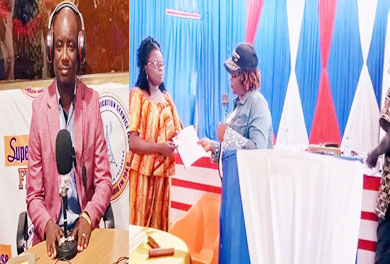
Former Bong County Electoral District #5 Representative, Edward Wormen Karfiah, has criticized the county’s proposed Fiscal Year 2026 budget of US$3,941,666.46.
Karfiah described the budget an “elite deal” that prioritizes a small circle of decision-makers while it ignored the urgent needs of ordinary residents.
Karfiah made the statement during a live radio interview in Gbarnga, when he openly questioned the credibility and fairness of the county’s financial planning process.
He argued that the budget, as submitted to the County Council, does not reflect the realities faced by residents, especially in rural communities, where access to basic services remains a major challenge. He said, critical sectors such as healthcare delivery, education, road infrastructure, and safe drinking water continue to suffer neglect, while budget allocations appear to lean heavily toward administrative “consumption and elite interests.” “The budget is not centered on the people. It is an elite arrangement that does not respond to the suffering of the locals.” Karfiah’s comments come shortly after the county authorities, led by Superintendent Hawa Loleyah Norris, formally submitted the proposed budget during the County Council’s second quarterly sitting, held on April 30, 2026. The presentation was made by County Financial Officer Silas Tokpah.
County officials have maintained that the budget is designed to strengthen development in infrastructure, health, education, agriculture and administrative operations.
They further insist that the plan will help sustain ongoing projects, and improve service delivery in the county. Karfiah, meanwhile, dismissed the explanations. He argued that similar promises have been made in previous fiscal years with little visible improvement in the lives of the locals.
He accused county authorities of repeatedly recycling development rhetoric while failing to deliver measurable impact in underserved communities.
Karfiah also warned members of the County Council to exercise strict oversight in rereading the proposal. He said, public funds must not be treated as “political rewards or administrative privileges.” “The Council must not rubber-stamp this budget. It must be carefully reviewed to ensure it serves the people, not a few individuals in power.”
He also wants a complete shift in budget priorities, insisting that development must be felt at the community level, and not remain confined to official documents and administrative offices.