Government has launched an ambitious plan to recruit 2,400 soldiers into the Armed Forces of Liberia (AFL) over the next four years.
The exercise began with an initial intake of 600 recruits at the Barclay Training Center (BTC) this year.
The nationwide recruitment exercise officially commenced on Monday, April 27, 2026, with authorities projecting that the full rollout will run through 2029.
Officials say, the move is intended to strengthen national defense capacity while providing opportunities for young Liberians.
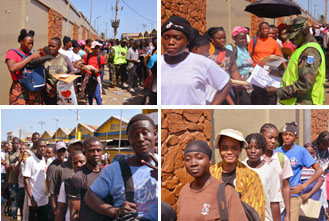
But scenes unfolding at recruitment centers, especially in Monrovia, suggest a more complicated reality.
Thousands of young people have flooded BTC.
Long queues stretch across the compound, with applicants waiting for hours under intense conditions.
The eligibility criteria require candidates to be between the ages of 18 and 35, yet, early observations point to deeper systemic concerns, some applicants reportedly struggle with basic literacy, raising questions about preparedness for military training and broader national education gaps.
While the government frames the initiative as a ‘strategic investment in security and youth empowerment,’ critics argue that the overwhelming turnout reflects a worsening unemployment crisis rather than a surge in patriotic enthusiasm.
“This is not just about service it’s about survival,” one observer noted at the scene, capturing a sentiment widely shared among onlookers.
Liberia’s youth unemployment rate has remained persistently high, with limited access to stable jobs pushing many into informal sectors.
For thousands now lining up to join the AFL, the military offers something rare: a steady income, structured career path and access to training.
In that sense, the recruitment exercise doubles as an emergency employment outlet.
However, some Liberians warn that relying on military recruitment to absorb jobless youth is not a sustainable economic solution.
To expand the armed forces without parallel investments in education, private sector growth and vocational training, risks “masking deeper structural weaknesses.”
The human stories emerging from the recruitment lines further highlight the stakes.
Among the applicants are recent graduates unsure of their next steps, young parents seeking financial stability and others simply searching for direction in a challenging economy.
Their motivations blur the line between ambition and necessity.
From a policy standpoint, the government’s plan may appear mutually beneficial, the AFL gains manpower while young people gain employment and discipline.
Yet, the visible desperation in recruitment lines raises concerns about whether the program is addressing national defense priorities or quietly functioning as a stopgap for economic hardship.
The AFL has announced that the recruitment will be conducted across four regions.
Following the Monrovia phase at the Barclay Training Center (April 27–May 15), the exercise will move to Tubmanburg City in Bomi County (May 18–29), Gbargna Sports Stadium in Bong County (June 1–12) and Zwedru Multilateral High School in Grand Gedeh County (June 22–27).