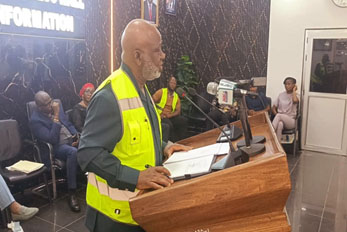
The Executive Chair of the Yellow Machines Board of Authority (YMBOA), Brownie J. Samukai, has calmed growing public concern over the management of the highly publicized yellow machines program.
Samukai assured citizens that the equipment will not be diverted for the personal benefit of “lawmakers, or politically- connected individuals.”
At a recent Ministry of Information press briefing in Monrovia, Samukai said, the machines are intended solely for “public infrastructure development, particularly the rehabilitation of farm-to-market roads, and major county routes that have long hampered citizens’ free movement.”
“The machines are for the people; not for personal initiatives,” Samukai declared.
He said, their primary purpose is to improve road connectivity nationwide, and unlock access to markets, schools and health facilities.
His statement comes amid rising skepticism from citizens, and civil society groups, many of whom fear that the massive road equipment project could become vulnerable to political interference, favoritism and misuse at the county level; an issue that has historically plagued previous public resource distribution.
Samukai explained that decisions regarding the use of the machines will not rest in the hands of lawmakers, rather with county-level committees headed by county coordinators. According to him, the decentralized approach is meant to ensure fairness, transparency and that deployment responds directly to “local road priorities instead of political pressure.”
However, critics argue that merely shifting decision-making to county committees may not be enough without clear public reporting systems, independent oversight and regular audits of machine usage, fuel consumption and maintenance contracts.
The yellow machines project, valued at US$285 million, is one of the flagship infrastructure initiatives of President Joseph Nyuma Boakai administration.
The government says the investment is central to the President’s vision of transforming road sector during his six-year constitutional term.
Poor roads remain one of Liberia’s most pressing development challenges, particularly in rural communities where farmers continue to struggle to transport produce to market centers.
Samukai noted that the first batch of 137 machines, which arrived on February 23, 2026, is currently undergoing assembly and testing in Careysburg before being deployed to the counties.
He further disclosed that the remaining machines are already en-route by sea and are expected to arrive within a month.
Once in the country, they too will be moved to Careysburg for inspection and preparation before nationwide deployment begins.