By Godgift Harris
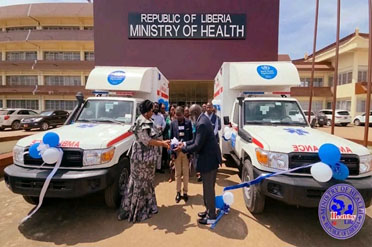
The Ministry of Health (MoH), has received two fully equipped ambulances, and a large consignment of medical supplies from the World Health Organization (WHO).
The donated materials are to strengthening emergency response services, and improve maternal and newborn care.
While the handover has been welcomed as a major boost to the struggling health sector, the donation has also drawn renewed attention to the deep structural weaknesses that continue to plague public health system, particularly at major referral centers.
The package, valued at approximately US$600,000, includes not only the ambulances, but also critical life-saving medical equipment, such as infant ventilators, neonatal incubators, resuscitation tools, and other emergency supplies designed to support mothers and newborns in life-threatening situations.
The donation comes just days after government launched an ambitious “365-day action plan” to reduce maternal and newborn mortality nationwide.
At the official handover ceremony in Monrovia, Health Minister Dr. Louise Mapleh Kpoto, described the donation as both timely and essential, noting that it arrives at a critical period when the government is under mounting pressure to improve healthcare delivery.
“This support comes at a very important time for our country.
We remain grateful to WHO for standing with Liberia as we work to improve emergency response systems, and save the lives of mothers and newborns.”
Dr. Kpoto’s remark, though optimistic, come against the backdrop of growing public frustration over the poor conditions in government-run health facilities.
Dr. Teyah Sackie Moore, Acting Chief Medical Officer and Deputy Minister for Health Services, said the donation reflects the strengthening relationship between Liberia and its international health partners.
Dr. Moore said, the support demonstrates confidence in the health priorities, and reinforces government’s efforts to address some of the gaps in maternal and neonatal care.
WHO Country Representative, Dr. Olushago Olu said the organization remains committed to support the country’s health priorities, particularly in reducing preventable deaths among mothers and infants.