By Godgift Harris
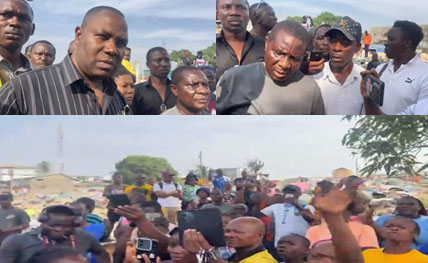
The unexpected visit of the chair of the governing Unity Party, Luther Tarpeh at the Saye Town demolition site over the weekend, was greeted with mixed reactions.
Tarpeh’s intervention in the aftermath of recent Saye Town demolition also sparked sharp criticisms. He bears a religious nomenclature of a reverend.
His statement was greeted with couple of questions from affected residents and members of the public as to the sincerity and timing of his actions.
Rev. Tarpeh, who visited the affected Saye Town community over the weekend, pledged to assemble a team of lawyers to pursue legal redress for residents whose homes were demolished.
The victims maintain that their properties were “unlawfully destroyed,” insisting they possess legitimate ownership documents for the land.
During the visit, Tarpeh also presented L$800,000 as “humanitarian assistance to the displaced families, while legal action is being pursued on their behalf.”
However, rather than easing tensions, the gesture has fueled skepticism among residents and political observers. Several affected residents accused Rev. Tarpeh, and the ruling establishment of exploiting their suffering for political mileage, noting that government officials failed to stand with them at the height of the demolition exercise.
“Where was the government when our houses were being broken down?” one displaced resident rhetorically asked.
“Now we are sleeping in the streets, cooking in the streets, with no medical care, and no real support, this money cannot solve our problem.”
Others considered the intervention as a “political showmanship,” arguing that the offered is grossly inadequate as compared to the scale of losses suffered by families, who have been rendered homeless.
Public reaction has also been divided, with many expressing the view that Tarpeh’s move appeared “more symbolic than substantive,” especially in the absence of clear government accountability or a halt to further demolitions.
As displaced residents continue to endure harsh living conditions, critics argue that what is urgently needed is not charity or political promises, but a transparent legal process, clear land policy enforcement, and decisive government action to prevent similar occurrence in the future.
For now, the plight of Saye Town demolition victims remains unresolved, underscoring broader concerns about land rights, governance, and the politicization of humanitarian crises.