By Abraham K Morris
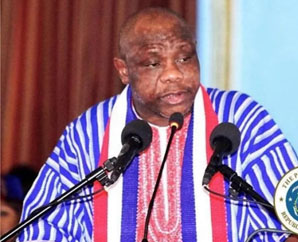
Former Minister of Finance and Development Planning, Samuel D. Tweah, Jr., has accused the Unity Party (UP)–led government of obscuring the true size of the public-sector wage bill.
Tweah alleged that at least, US$26 million in salaries, has been hidden under a budget line item labeled: “Other Compensation.”
In a sharply worded public commentary released over the weekend, Tweah said, the government payroll has climbed to US$354 million in the proposed 2026 national budget, up from US$113.9 million in 2010.
He argued that while the official compensation line is reported at US$329 million, an additional US$26 million has been placed under “Other Compensation,” a subcategory of goods and services with budget code 222123.
He claimed that the practice undermines transparency, and distorts public understanding of government spending.
“Other Compensation is not supposed to be a salary line. Yet in the last two years of the so-called Rescue administration, it has emerged as a major vehicle for employing workers, and keeping those costs out of public view,” Tweah wrote.
He said, under the previous Coalition for Democratic Change (CDC) administration, spending under “Other Compensation” peaked at “just over US$5 million in 2023, stood at slightly above US$2 million in 2022, and averaged below US$200,000 annually in the years prior.”
By contrast, he said, the current administration has expanded the line dramatically, effectively using it to mask the real wage bill.
Tweah argued that this accounting maneuver is deliberate, as public scrutiny tends to focus on the core “Compensation of Employees” category, coded under the 21-series in the national budget.
He meanwhile, called on the government to abolish the “Other Compensation” line altogether, and to report all employee-related costs transparently under the proper compensation codes.
Tweah also urged the Legislature to address the issue during the 2026 mid-term budget review, and encouraged journalists to closely monitor the disputed line item.
“With compensation now standing at US$354 million, this represents an increase of more than US$43 million since the CDC left office. This flatly contradicts claims by the Civil Service Agency about a reduced wage bill, and undermines commitments reportedly made to the International Monetary Fund under the IMF-supported program.”
Tweah further used the data to draw a political comparison between successive administrations, arguing that public wage growth accelerates under UP-led governments, and stabilizes under CDC leadership. He described three distinct phases in the wage trajectory: a rising curve under the AFT-era UP government, a flattening during the Pro-Poor Agenda period under the CDC, and a renewed upward surge under the current Rescue administration.
He then challenged the public, particularly students of economics and business, to examine the figures critically.
“These numbers tell the story of how public wages have evolved They also raise a hard question about how much further can the wage bill grow without meaningful salary improvements for government workers, who continue to be sidelined, even as the country operates under a US$1.2 billion national budget?”
The government has not yet publicly responded to Tweah’s claims.