“The money is spent to improve Liberia’s international standing, attract foreign investment, secure development assistance, and deepen diplomatic relations with the U.S…,”
–an inside source.
Government has punched itself into growing public scrutiny following its decision to sign a new lobbying agreement with United States-based firm Ballard Partners.
The contract will cost taxpayers’ US$100,000 per month, amounting to US$1.2 million annually.
The one-year agreement, reportedly signed on May 18, is intended to strengthen Liberia’s diplomatic, political and economic engagement with the United States through strategic advocacy and representation in Washington, D.C.
In the details surrounding the arrangement, Ballard Partners will serve as an intermediary between Liberia and influential U.S. government officials, businesses, policymakers and non-governmental organizations in an effort to advance the country’s interests abroad.
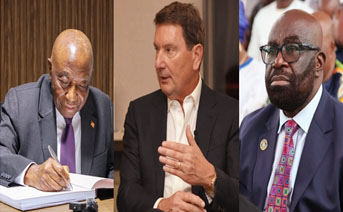
The contract was reportedly executed by Brian Ballard on behalf of the lobbying firm and Liberian representative Samuel Stevquoah, a minister for state affairs in the office President Joseph Nyuma Boakai.
Government officials have defended the agreement as part of a strategy to improve Liberia’s international standing, attract foreign investment, secure development assistance, and deepen diplomatic relations with one of the most important international partners.
However, the decision has generated significant criticism from citizens, and political observers, who have questioned whether spending US$1.2 million on foreign lobbying reflects the most urgent needs.
The controversy emerges against the backdrop of worsening economic conditions affecting the country, including rising living costs, unemployment, inadequate public services and limited access to essential social programs.
Critics argue that while diplomatic engagement remains important, the government should prioritize domestic challenges before committing substantial public funds to lobbying efforts overseas.
Many citizens have pointed to persistent concerns within the public sector, where civil servants continue to complain about low salaries, delayed benefits and difficult working conditions.
Others contend that investing heavily in foreign consultants sends the wrong signal to ordinary Liberians, who continue to demand improvements in healthcare, education, road infrastructure, sanitation, and employment opportunities.
Questions have also been raised regarding the timing of the agreement, particularly as the government faces increasing pressure to address economic hardships affecting vulnerable communities.
The administration has defended its international engagement strategy by emphasizing the importance of maintaining strong ties with the United States.
Officials have pointed to recent cooperation initiatives between the two countries as evidence that stronger diplomatic engagement can yield meaningful benefits for Liberia.
One such example is the five-year health partnership signed between with the United States in December, valued at up to US$125 million in American assistance.
Under that arrangement, Liberia also committed to increase domestic spending in the health sector by approximately US$51 million over the same period.
Supporters of the Ballard Partners agreement argue that stronger representation in Washington could position Liberia to secure additional development support, trade opportunities, investment inflows, and strategic partnerships.
They maintain that lobbying has become a common tool used by governments around the world to promote national interests, and influence policy decisions in major global capitals.
Meanwhile, calls have grown for greater transparency regarding the specific objectives, benchmarks and deliverables contained in the contract.
The latest agreement has also revived discussions about Liberia’s long history of retaining U.S.-based lobbying and public affairs firms.
During the administration of President Ellen Johnson Sirleaf, Liberia maintained a long-standing relationship with KRL International, reportedly paying approximately US$368,000 per annual.
KRL International was instrumental in supporting Liberia’s engagement with U.S. policymakers, advocating for debt relief, promoting development assistance, and encouraging foreign investment throughout much of the Sirleaf era.
Under President George Weah, Liberia retained multiple lobbying firms, including KRL International, Ballard Partners, Sonoran Policy Group, Ice Miller Strategies, Strom Partners and Carbon Thread.
Ballard Partners reportedly secured a contract valued at approximately US$900,000 annually during the Weah administration to help improve relations with U.S. institutions and policymakers.
Other firms reportedly received contracts ranging from US$180,000 to US$240,000 per annual to provide advisory and advocacy services on behalf of the Weah government.
In September 2022, the Weah administration also appointed Bakari Sellers, as a lobbyist in Washington in an effort to improve Liberia’s international image amid recurring concerns over corruption and human rights issues.
However, the Boakai new agreement has reignited debate over the effectiveness of foreign lobbying contracts and the value they deliver to ordinary Liberians.