By Godgift Harris
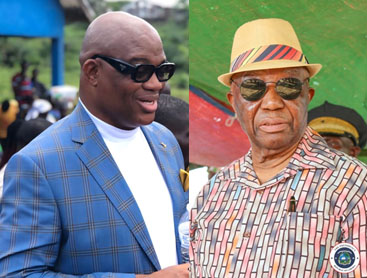
The political leader of the opposition, Movement for Progressive Change (MPC), has accused President Joseph Nyuma Boakai of corruption. Simeon Freeman described the President as “the most corrupt president ever,” a claim that has intensified national debate over governance, accountability, and economic priorities.
Freeman, a businessman-turned-politician, made the allegations in a lengthy statement posted on his Facebook page on January 15, 2026.
He portrayed the presidency as a sacred public trust burdened with the expectations of nearly six million citizens grappling with poverty, unemployment, and weak public services.
In his statement, Freeman argued that despite repeated reform promises by successive administrations, the country continues to face deep structural challenges.
He cited data indicating that more than 60 percent of Liberians live below the poverty line, with over 30 percent in extreme poverty, while youth unemployment remains persistently high.
Freeman also highlighted troubling social indicators, including maternal mortality rates, which he placed between 628 and 854 deaths per 100,000 live births well above the sub-Saharan African average.
He further pointed to chronic weaknesses in the health sector, claiming that in some areas a single doctor serves between 5,000 and 20,000 people.
On infrastructure, he noted that only a small portion of Liberia’s estimated 12,000 to 15,000 kilometers of roads are paved, while electricity costs remain among the highest in the region.
Economically, Freeman criticized country’s heavy reliance on imports and raw material exports, arguing that taxes on imported goo disproportionately burden ordinary citizens.
He described the country business climate as weak, alleging the absence of a coherent investment strategy capable of generating sustainable jobs.
At the center of Freeman’s allegations is a claim that Pres. Boakai, within his first year in office, initiated the construction of a retirement home in Foya, Lofa County, allegedly using public funds not approved in the national budget.
Freeman claimed that the project could cost up to US$10 million, contrasting it with “unmet government commitments,” including a pledge to train 10,000 young people in computer skills.
“If these actions occurred without the President’s direct knowledge,” Freeman argued, “then serious questions must be asked about which ministers authorized the spending; where the funds came from, and why no one has been held accountable.”
Freeman also accused the Boakai administration of prioritizing regional diplomacy, particularly efforts focused on stability in the Mano River Basin to address domestic economic and social challenges.
Though Guinea is ruled by military junta, Freeman contended that neighboring countries in the sub-region exhibit stronger economic indicators, and face fewer immediate destabilization threats.
As of the time of this publication, the Boakai administration has not issued an official response to Freeman’s specific claims.
However, government officials have previously rejected broad corruption allegations against the President.
They maintained that the administration remains committed to transparency, including public sector reform and accountability through audits and anti-corruption measures built on existing frameworks.