By Domingo Dargbeh
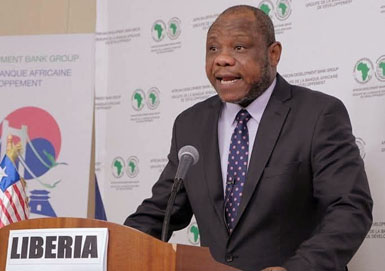
U.S. sanctioned former Finance Minister, Samuel D. Tweh, Jr., has refuted assertions by the Minister of Finance, Development Planning, Augustine Ngafuan, regarding the reversal of ‘salary harmonization.’ Tweah stressed that claims suggesting the need to “reverse the infamous salary harmonization” are fundamentally incorrect.
He clarified that the Liberia Anti-Corruption Commission (LACC) and the General Auditing Commission (GAC), “were never harmonized in the first place.”
According to Tweah, “these integrity institutions already operated under a unified pay structure prior to the harmonization reforms.”
The changes implemented merely standardized the pay grades, ensuring hiring and compensation followed a rule-based framework rather than arbitrary discretion.
He criticized Ngafuan’s team for lack of thorough research on the topic: “The LACC and GAC were never subjected to the same controls as over 100 other government entities.”
“It is essential for the current administration to understand that reversing harmonization is not synonymous with increasing salaries.”
Tweah highlighted the positive impact of the harmonization reform, which, in its first year, increased the salaries of 15,000 workers with an additional 45,000 government employees’ salaries being raised over the three years.
Among those reportedly benefitting were instructors at the University of Liberia, who saw their salaries increased by more than 60 percent. Tweah, a Bunga dancer partner to Mr. George Weah, further said, the reversing harmonization would entail reinstating the outdated Basic Salary
+ General Allowance dual-pay system that the reform abolished.
Tweah presented a simplified comparison of a hypothetical worker, John Peter, showing the changes in his salary and personal income tax obligations before and after the harmonization.
Analysis of Salary Changes:
Before the harmonization process of a monthly basic salary was L$18,750, with annual gross pay of US$3,010; annual PIT: US$199.
But after the harmonization
combined with gross salary was L$46,650 monthly with annual gross pay of L$559,800.
Of the annual PIT of US$325, Tweah said, John Peter’s annual tax obligation increased by US$126 after the harmonization.
However, he said, this was not a pay cut, rather a result of consolidating two income streams into one taxable amount, aligning with global practices where workers pay taxes on a single income.
“The assertion that reversing harmonization will increase pay is misleading,” Tweh noted.
Adding: “To reverse harmonization, the government would have to reinstate the dual-pay system, which would negate the gains made.”
He called for clarity on the issue, insisting that the harmonization process, which was politicized for power gains, cannot be undone by the current administration.
The National Remuneration and Standardization Act, which underpins the harmonization, mandates regular salary increases while ensuring equity across the board.
Tweah meanwhile, urged the current government to recognize that by increasing salaries.
“It is in fact, reinforcing the principles of harmonization rather than reversing them,” Tweah remarked.