By: Samuel Flomo, Jr.
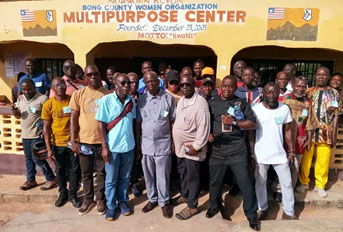
The National Rubber Brokers and Farmers Union of Liberia (NARBFUL) has exposed what it called the systematic looting and mismanagement of Liberia’s rubber sector, warning that smallholder farmers, the backbone of the industry are being deliberately shut out by government officials and powerful plantation elites. Speaking at a one-day engagement with union officials in Gbarnga, NARBFUL President, James W. Sayekea, said the sector has been politicized, corrupted, and hijacked, leaving the majority of producers—who generate nearly 65 percent of Liberia’s rubber—marginalized and ignored. “The rubber sector has become a playground for elites, while ordinary farmers are left to struggle,” Sayekea declared. “Despite Liberia’s immense natural resources, the government has failed to regulate, protect, or add value to what belongs to the people.” Sayekea specifically condemned the Rubber Planters Association of Liberia (RPAL) for dominating national policy in favor of large plantations, including Firestone and Salala Rubber Corporation, while smallholder farmers are excluded from decision-making processes. He also criticized the Rubber Development Fund Incorporated (RDFI) and its Chairman, Tokpah John Mulbah, accusing them of acting on private interests rather than public duty. Sayekea noted that RDFI was established without consulting the majority of rubber producers, a move he called unconstitutional and unjust. “When laws are made for 97 percent of producers by just 3 percent, it is not only unfair—it is illegal,” Sayekea said. The NARBFUL president also reiterated that rubber brokerage in Liberia is legally reserved for Liberians, warning foreign nationals against buying directly at farm gates. “Foreigners can invest, but they cannot take our livelihoods. If they violate the law, we will get them out,” he stated firmly.
The one-day engagement produced formal resolutions and petitions that NARBFUL intends to submit to the Government of Liberia, including the Legislature and key ministries.
Sayekea emphasized that the union will take decisive action to defend smallholder farmers and demand accountability from those controlling the sector.
“This is a wake-up call to the government: stop betraying Liberia’s farmers or face the consequences,” he warned.
The revelations have reignited national debate over who truly controls Liberia’s rubber sector, exposing what critics call a system where wealth and influence are concentrated in the hands of a few, while the majority of producers remain voiceless, exploited, and ignored.