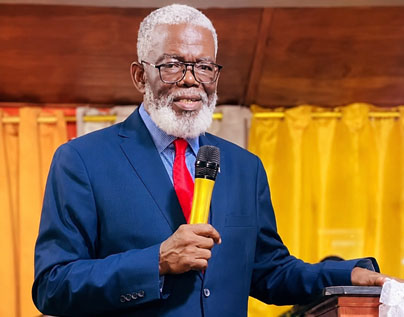
United States Government recent decision to remove the name of the Late Prince Yormie Johnson (PYJ) from its sanction list has sparked renewed public debate.
The debate has also eclipsed news of the name removal with many questioning the essence of the decision ever since PYJ died.
Johnson, a former rebel fighter, was a sitting senator of Nimba County when he died late 2024.
U.S. Treasury Department announced the removal of his name from the sanction list as part of an update to its sanctions register.
While such actions are often considered routine “administrative procedures,” the decision has generated widespread discussion, where Prince Johnson remained one of the most influential and controversial political figures.
The United States Government sanctioned Johnson in December, 2021, under allegations of corruption and abuse of public office.
At the time, the sanctions were presented as part of Washington’s efforts to promote accountability, transparency and good governance.
The sanctions attracted considerable national attention due to Johnson’s political influence, particularly in Nimba County, where he kept a strong support base, and played a key role in shaping electoral outcomes for years.
Following his death, the U.S. Government removed his name from the sanctions list; a move that some observers described as a “standard administrative adjustment intended to ensure official records accurately reflect current circumstances.”
However, the decision has prompted many to question the practical purpose served to remove a deceased’s individual name from a sanction register.
Critics argue that the sanctions effectively ceased to have any direct impact once Johnson passed away, as he could no longer travel, conduct financial transactions, hold public office, or engage in activities restricted by the measures.
Political analysts note that while the name removal may be legally straightforward, it carries symbolic implications that have fueled public discussion.
Some supporters of the late senator view the action as a form of closure for his family and political allies.
Others, however, caution against interpreting the decision as an exoneration.
They emphasize that removal from a sanctions list does not erase the allegations that led to the sanctions, or alter the historical record surrounding the case.
Legal experts have pointed out that governments often remove deceased individuals from sanctions databases to maintain the accuracy of official records.
Such actions, they argue, should not be interpreted as a reversal of previous findings or policy decisions.
The debate has also reignited conversations about the effectiveness of sanctions as a tool for promoting accountability and combating corruption.
Some Liberians argue that sanctions often generate publicity, but have limited impact in producing long-term institutional reforms.
Others contend that international sanctions remain an important mechanism for drawing attention to allegations of misconduct and placing pressure on public officials, including Margibi County Senator Nathaniel McGill, former Monrovia City Mayor, Jefferson Tamba Koijee, all accused of corruption.
The public reaction has further highlighted concerns about governance and accountability.
Many citizens say greater attention should be directed toward addressing allegations that involved current public officials rather than focusing on administrative actions.