By Emmanuel Koffa
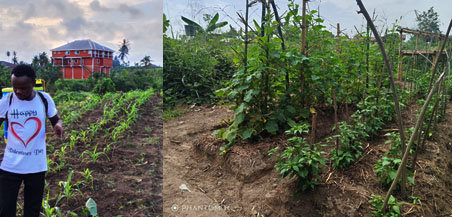
The expansion of Rabasco Tugbe Chie’s cucumber enterprise from Grand Kru to Gbarnga, in Bong County, has sparked conversations that go beyond business growth.
While many celebrate the rise of youth-led agribusiness, others question the impact of ambition on local communities left behind. Chie, a recent graduate of Uttaranchal University and former Grand Kru Youth president, gained early recognition for supplying high-quality cucumbers to local markets. His reliability earned him a loyal following among vendors and consumers, but the shift to Bong County, has led to unintended consequences.
“Prices have gone up because his cucumbers are no longer in the market. People trusted his produce. Now, we are scrambling to fill the gap,” said Madam Fatu Kpah, a trader in Grand Kru.
Critics argue that while relocation to a bigger market makes business sense, it raises questions about responsibility to the communities that nurtured his early success. Without a structured transition plan or mentorship for upcoming farmers in the county, though sparsely populated, the move risks creating short-term market disruptions and leaving younger farmers without guidance. “Scaling up is essential for growth, but leadership also requires accountability. The community that helped build your enterprise should not be left behind,” said agribusiness analyst.
In Gbarnga, Chie faces new challenges: managing larger production, ensuring post-harvest storage, securing transport logistics, and competing with established local suppliers.
Yet, analysts underlined that the operational hurdles, while important, are secondary to the broader question of inclusive development.
Observers note that Liberia’s push for youth participation in agriculture depends not only on profit-oriented ventures, but also on models that prioritize local mentorship, knowledge transfer, and sustainable community impact.
The true measure of success, they argue, will not only be financial returns, but also whether Chie’s move leaves both Grand Kru and Gbarnga better off.
Chie himself acknowledged the balancing act. “I am committed to growing the business, but I know the importance of staying connected to my roots. I hope to establish mentorship programs for young farmers in Grand Kru even as I expand here.”
The coming seasons will reveal whether this venture becomes a blueprint for modern youth agribusiness; one that balances ambition with social responsibility, or a cautionary tale of growth pursued at the expense of the very communities that made it possible.