By Julius Konton
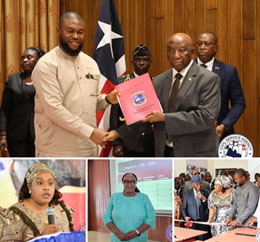
President Joseph Nyuma Boakai, has highlighted tangible progress in civil service, education and health sectors.
Boakai framed the reforms as part of a broader attempt to dismantle decades of inefficiency, patronage, and post-civil war institutional fragility.
The statement was contained in the President’s third State of the Nation Address (SONA) on Monday, January 26, 2026, at the Capitol Building in Monrovia.
He underscored reforms carried out in 2025, particularly within the Civil Service Agency (CSA), a key institution historically criticized for bloated payrolls, weak accountability and political interference.
Civil Service Reform: Merit over Patronage
According to the President, the CSA intensified merit-based recruitment through the establishment of a Civil Service Testing Center, a move to standardize hiring practices and reduce political favoritism.
Staff welfare measures were also expanded.
The government introduced a 50 percent salary-advance option, broadened long-term loan programs, and automated legal and administrative services to reduce bureaucratic delays.
These reforms, Pres. Boakai said, are intended to improve morale and productivity across the public sector.
One of the most politically significant announcements was the placement of more than 3,400 long-serving volunteers in the education and health sectors onto the national payroll. This, has ended years of unpaid or irregular service for several other workers.
In addition, Boakai stated that salaries were increased for over 23,000 frontline workers in health, education, security and agriculture sectors that employ a large share of civil workforce.
The civil service has long been characterized by wage compression and payroll distortions, problems compounded by years of donor dependency and weak domestic revenue mobilization.
Analysts say the administration’s challenge will be sustaining these reforms amid fiscal constraints.
Drug Abuse and Social Stability
On a growing public health and security concern, Boakai announced the launch of first National Anti-Drug Action Plan, designed to curb both demand and supply of illicit drugs.
By the end of 2025, over 800 at-risk youth had been enrolled in rehabilitation and recovery programs.
Nevertheless, Boakai’s third State of the Nation Address marks a clear attempt to shift governance narrative from survival, and stabilization to institutional reform nearly two decades after the end of its brutal civil conflict.
Whether these reforms translate into durable structural change, remains a defining test for the Boakai’s administration.