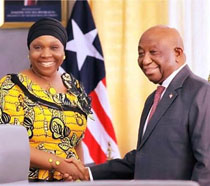
Diplomacy seemingly built on personality rather than institutional strength appears inherently unstable and vulnerable to collapse; and dominance in media coverage has further fueled resentment as such imbalance has left many feeling that Liberia’s foreign policy is being defined by one individual’s visibility rather than collective achievements, particularly because, the perception of self-promotion is reportedly making diplomats and heavyweight politicians in JNB’s government unhappy, claimng personal brand promotion campaign by Foreign Minister Sara Besolow Nyanti.
Amid growing concerns over reported personal brand competition in Liberia’s foreign policy corridors, internal disagreement and uneasiness are becoming difficult, if not impossible to conceal, thus claiming the attentions of concerned diplomatic analysts, pro-democracy organizations and others.
One of such institutions pushing to ensure transparency, accountability and efficiency in Liberia’s diplomacy is the Independent Civil Society Union of Liberia (ICSUL), which has raised alarm over an alleged US$35,000 monthly payment to Vanguard, a Washington D.C.-based brand promoter, under an unclear image building project for Foreign Minister Sara Beysolow Nyanti.
The civil society group, on Saturday, May 16, 2026, stated that the amount ($35,000) is reportedly being paid on a monthly basis to promote the personal brand of Minister Nyanti, who has become arguably, the most visible figure in the government, a prominence that is stirring growing unease among members of the current administration and beyond, with many believing that her perceived leadership influence is less about genuinely advancing the country’s foreign policy agenda, but rather more about elevating her personal image domestically and internationally.
Amid constant reports of her alleged micromanagement (usurpation) leadership style at the Foreign Ministry, additional allegations have surfaced that she is paying US$35,000 each month from government funds to Vanguard, a Washington D.C.–based company, to promote her brand by, among other things, arranging political meetings and image-building campaigns for her, raising questions about whether state resources are being used for national diplomacy or personal publicity.
These revelations have added fuel to broader criticisms that Nyanti’s approach to foreign affairs is centered on personal visibility rather than substance, as her speeches, and appearances dominate media coverage, often overshadowing other actors (ministers) and even the president.
As has been reported severally in the last two years, the CSO group also highlighted growing unease within the Ministry of Foreign Affairs as the Minister has reportedly sidelined presidential appointees, concentrating decision-making among irregular people such as loyalists and consultants, something insiders describe as a ministry where official offices are dormant while decisions are made elsewhere, creating the impression of a “government within a government.”
One senior official who preferred anonymity, lamented that Nyanti travels with personal security and domestic staff, while the ministry itself is bloated with dozens of hires, including confidants tied to her political base. “This expansion has inflated the budget without producing visible diplomatic gains,” the official added.
The Independent Civil Society Union further pointed out that among those sidelined were former Assistant Minister Karishma Pelham-Raad whom Minister Nyanti did not succeed in replacing with her Chief Of Staff (COS), and another Assistant Minister, Eva Koon, who resigned in early 2026, over frustration of being marginalized, and is being replaced with a partisan and loyalist of the Minister. “Their departures have reinforced the perception that loyalty to Nyanti, not competence, determines who thrives in the ministry,” the group noted.
Critics have also cited manipulation of public perception by influencing some news outlets and bloggers to grade her (Nyanti) performance “A+” while the President who appointed her and is the Chief Architect of Foreign Policy was graded “B.” Such tactics, they argue, distort reality and reduce foreign policy to a stage for self-promotion.
Verity News and other media institutions reported in late 2025 that Nyanti faced allegations of covert deployments and politicized appointments, as insiders claimed individuals recommended for foreign postings were vetted not on merit but on political loyalty and personal affiliation with the Minister. One diplomatic official explained that long-serving diplomats with stellar records were passed over while people with no foreign service experience were flown to embassies. “For a country that depends on credibility in negotiations, such choices risk embarrassment and weakened relationships,” the official lamented.
The civil society group said it agrees with diplomats and other officials who continue to warn that sending unqualified and/or incompetent envoys abroad undermines Liberia’s standing, because diplomacy requires professionalism and expertise, arguing that Nyanti’s reliance on loyalty over competence is weakening the nation’s credibility and killing momentum on the diplomatic front.
The group mentioned that Minister Nyanti, in her personal promotion quest, is also claiming personal credit for Liberia’s election as a non-permanent member of the UN Security Council, despite visible evidence that the achievement was the product of years of collective diplomatic effort.
Critical voices have also referenced the much-publicized US$25 Million Nekotech scholarship program fiasco, which was rolled out with fanfare but quickly collapsed under scrutiny. Applicants were asked to pay $236 in unexplained fees, prompting former Assistant Minister of Information, Matthew Nyanplu to call the announcement “sensational yet deceptive. ”For many, the scholarship episode reinforced the perception that Nyanti’s projects are designed more for headlines than substance. The publicity was strong, but the results were disappointing.
Insiders at the ministry, have repeatedly describe an environment where dissenting voices are silenced and decisions revolve around Nyanti’s preferences. Career professionals, they say, feel excluded, while unqualified loyalists are promoted, usurping presidential appointees’ functions, an imbalance that erodes trust, damages morale, and undermines Liberia’s ability to negotiate effectively abroad.
Experienced diplomats reportedly feel their expertise and services are ignored, while younger and inexperienced staff members are thrust into roles they are not prepared for, a situation observers term as dangerous, arguing that Nyanti’s “visibility-first” approach has become her hallmark. Initiatives, according to them, are announced with great publicity but lack proper planning, oversight, or tangible results. The focus, they say, is on image rather than impact.
Describing the risks of such an approach as significant, diplomats also opined that if Liberia’s foreign policy rests on the visibility of one individual rather than the competence of its institutions, the foundation is fragile and unsustainable because, should Minister Nyanti’s image falter, the country’s credibility could falter with it.
They maintained that diplomacy built on personality rather than institutional strength is inherently unstable and vulnerable to collapse. Her dominance in media coverage has further fueled resentment. Sympathetic outlets amplify her speeches and appearances, often overshadowing other ministers and even the president. This imbalance has reportedly left many feeling that Liberia’s foreign policy is being defined by one individual’s visibility rather than collective achievements.
According to Foreign Ministry insiders, including top diplomats, the perception of self-promotion has become difficult to ignore. They underscored that while Nyanti is admired abroad for her energy and composure, at home, she faces mounting criticism for questionable appointments, media manipulation, and misplaced priorities. The broader struggle, they add, remains whether Liberia’s foreign policy should be driven by one person’s ambition or by collective institutions committed to national progress.
Diplomatic analysts and other senior officials insist that for Liberia to thrive internationally, foreign affairs must return to competence, inclusivity, and collective responsibility. They argue further that diplomacy cannot be sustained on image alone, and until that shift occurs, Nyanti’s leadership style will remain a lightning rod for controversy, and Liberia’s diplomacy will remain vulnerable to the risks of self-promotion.
The office of Minister Sara Besolow Nyanti is yet to respond to repeated concerns including the latest revelations. Efforts to also get Assistant Minister for Public Affairs, Saywhar Nana Gbah comment on the matter did not materialize up to press time, as she could not confirm nor deny these troubling revelations. Sources closed to Minister Gbah say she’s apparently seeking the appropriate authorization to make a determination as to whether or not to respond.
Some senior officials and close aides, including Political Advisor to President Boakai, Macdalla Cooper and Tourism Ambassador, Christopher Hayes Onanuga, have already started to dismiss what appears as a coordinated social and traditional media campaign projecting Minister Nyanti as the most effective, influential and consequential character in government. The two officials (Cooper and Onanuga) have been reacting to pro-Nyanti social media posts in which she’s projected and described as the engine that is keeping aathe Boakai administration alive and breathing across the world.
Cooper and Onanuga have dismissed the apparent pro-Nyanti personal brand promotion campaign, and have stated clearly that the engine of the government is President Joseph Nyuma Boakai, and no one else.
Meanwhile, the Independent Civil Society Union of Liberia has added its voice to those of many other organizations and individuals calling for care and stability in Liberia’s foreign policy administration, while at the same time urging President Joseph Nyuma Boakai to look beyond what the group called overblown euphoria, and probe into the many concerns including the reported US$35,000 foreign brand promotion deal arising from the Ministry of Foreign Affairs, the country’s foreign policy hub.