By Godgift Harris
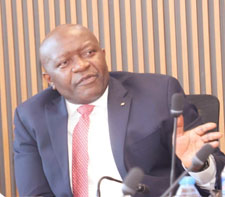
Finance and Development Planning Minister Augustine Kpehe Ngafuan, has called for enhanced accountability, financial discipline, and deeper collaboration between contractors and financial institutions as essential pillars for sustainable national development.
Ngafuan’s statement was contained in his address at a high-level gathering of stakeholders’ ongoing Contractors Banks–National Road Fund Forum in Monrovia.
He delivered a message centered on restoring trust, improving financing mechanisms, and ensuring efficiency in the execution of public infrastructure projects particularly within the roads sector.
The three-day forum, which has drawn together contractors, commercial banks, policymakers, and representatives of the National Road Fund, is being hailed as a pivotal platform for addressing longstanding bottlenecks affecting procurement systems and access to financing for infrastructure development.
Minister Ngafuan underscored the country’s need of ambitions for modern infrastructure, which he said, cannot be realized without “credible and transparent financial systems.”
He stressed that accountability and performance must form the bedrock of all contractual and financing arrangements.
“We must build trust in the system. Without accountability and performance, financing will always remain difficult. Contractors, banks, and government must work collectively to ensure that confidence is restored and sustained.”
His remarks come at a time when Liberia continues to prioritize road connectivity as a key driver of economic growth, trade facilitation, and rural transformation.
During the interactive session, contractors candidly outlined the constraints they face in executing projects efficiently.
Chief among these were limited access to affordable financing, delays in government payments, and stringent collateral requirements imposed by commercial banks.
Many contractors noted that delayed disbursements not only stall project timelines, but also erode their credibility with lenders, creating a cycle of financial instability that undermines their ability to secure future contracts.
Many expressed optimism that the engagement would lead to tangible reforms capable of transforming infrastructure financing ecosystem.