By Samuel Flomo, Jr.
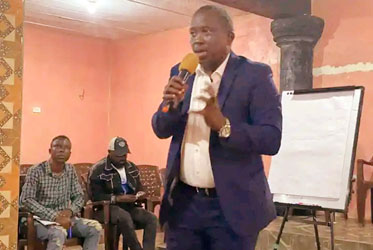
New Narratives, with funding support from the Swedish International Development Cooperation Agency (SIDA), has concluded a two-day intensive training for journalists, editors, and talk-show hosts from Bong, Nimba, and Lofa counties.
The training was on the operations and mandate of the proposed War and Economic Crimes Court (WECC).
It was held over the weekend in Gbarnga, Bong County, and brought together media practitioners.
During the closing ceremony, New Narratives Assistant Editor and Senior Justice Correspondent, Anthony Stephens, said the training was designed to deepen journalists’ understanding of international criminal law, and the complex decisions ahead for the Office of the War and Economic Crimes Court (OWECC).
Stephens said informed journalism is essential as Liberia prepares to address crimes committed during the civil war, and large-scale economic violations that continue to affect national development.
The initiative seeks to strengthen fact-based, ethical, and trauma-informed reporting.
On that, Mr. Stephens warned that misinformation and disinformation could undermine public confidence in the justice process if journalists are not properly equipped.
He spoke of the need to understand court’s mandate, jurisdiction, and legal framework as critical for accurate and responsible reporting.
The training featured a diverse team of facilitators, including human rights advocate Tiawan Gongloe; Hassan Bility of the Global Justice and Research Project; Sadatu Sheriff of the Liberia Association of Psychosocial Services, and Counselor Jallah Barbu, Executive Director of the OWECC of Liberia.
Other facilitators were Marlon Demafad of the United Nations Office of the High Commissioner for Human Rights, Madam Garmmai Koko of the Women Peacebuilding Network, and Emmanuel Gbanwouquya of the Lutheran Massacre Survivors Association.
For the two days, participants received in-depth briefings on the Truth and Reconciliation Commission (TRC) Report; crimes against humanity; economic crimes, and the principles of international law.
Special attention was given to ethical journalism, including reporting truth over speed, protecting survivors from re-traumatization, countering misinformation, and amplifying the voices of victims and marginalized communities.
The training also aimed to strengthen collaboration between journalists, and key justice stakeholders, ensuring broader and more accurate national coverage of Liberia’s transitional justice efforts.
As Liberia moves closer to a long-anticipated moment of accountability, the program reaffirmed the vital role of the media, not just as observers, but as guardians of truth in a process that could define the nation’s future and help heal the wounds of its past.