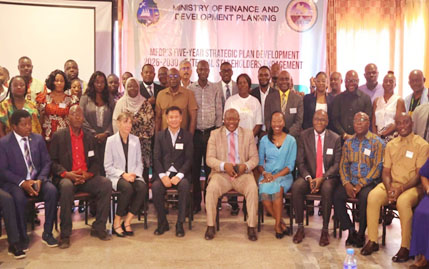
Finance and Development Planning Minister, Augustine Kpehe, says the ongoing consultations on the Ministry’s Strategic Plan will produce a document that will guide the institution over the next five years. Ngafuan said the Strategic Plan (2025–2026) must serve long-term interests rather than any single political agenda.
He spoke on Tuesday at MFDP’s 5-Year Strategic Plan External Stakeholders’ Engagement in Paynesville.
He said the plan, “is not for me; it is for the Ministry of Finance, because political leaders are merely occupants and tenants of an institution belonging to the Liberian people.”
Mr. Ngafuan meanwhile, encouraged lawmakers, development partners, and government representatives to speak candidly.
“We don’t want this to be too scripted and regimented. Talk and give whatever thoughts you have freely so that we capture them. It is never too late to get a good idea to make a document better.”
While highlighting key focus areas of the Plan, Mr. Ngafuan cited modernizing financial systems, enhancing public financial management, improving fiscal reporting, advancing debt and domestic revenue management, digitizing HR processes, promoting diversity and inclusion, and strengthening service delivery through technology.
He said the plan also proposes institutional reforms, including a new Ministry headquarters to replace the aging Broad Street building, updating the 2013 MFDP Act, and increasing the autonomy of the Office of the Comptroller and Accountant General.
Bong County Senator Prince K. Moye, Chair of the Senate Ways, Means, Finance and Budget Committee, praised the Ministry’s fiscal management, noting a departure from past challenges.
“Those days the budget used to pass with ministries and agencies not receiving their allotments, but the efficiency in budget disbursement has increased under this regime. I want to thank the folks at the Ministry of Finance for this great transformation.”
Sen. Moye pledged the Senate’s support for reforms and safeguarding national budget priorities.
The Chair of the House’s Committee on Ways, Means, Finance and Budget, P. Mike Jurry, appreciated the MFDP team for crafting the Strategic Plan.
Jurry applauded the effectiveness and collaboration between the Legislature and the Ministry, which he said, has produced results for the common people.
World Bank Country Manager Georgia Wallen, expressed appreciation for the opportunity to engage with the Ministry of Finance in crafting a strategic five-year plan.
Earlier, Deputy Finance Minister for Administration, Bill McGill Jones, recalled how nearly two years ago, the Ministry committed itself to reforms.
The reforms, Jones said, aimed at restoring public confidence and rebuilding institutional systems.
He said the Ministry has since delivered on major national priorities, including the ARREST Agenda for Inclusive Development, the County Development Agenda, and the Public Sector Investment Plan.
“We promised to begin a process that would shape the future of the Ministry. Today is another step forward. This plan is not just a document, it is a roadmap that will guide us toward stronger performance, smarter decision-making and better use of resources.”
Jones said the plan, developed under the theme: “Transforming Priorities into Strategies: Pathway to Efficient Service Delivery,” is expected to clearly outline the Ministry’s priorities and operational direction over the next five years.
Jones reaffirmed MFDP’s commitment to continued engagement with partners across government, civil society, and the international community.
“We will continue to engage widely. The insights gathered will help us ensure that our work becomes more responsive to national priorities.”
Assistant Minister for Administration, Paul T. Lamin said, the success of MFDP’s new strategic plan relies heavily on strong partnerships beyond the Ministry’s walls.
Lamin said the participation of development partners, sector ministries, civil society, and other national actors is “essential.”
He said the engagement forum provides a vital platform for open dialogue, alignment of priorities, and a shared understanding of the opportunities and challenges ahead. Lamin added that stakeholders’ inputs will directly shape the refinement of the draft plan, ensuring it is inclusive, data-driven, and reflective of Liberia’s broader development aspirations.
The one-day engagement brought together officials from ministries, agencies, and commissions, the partner community, the Legislature, and civil society.