-Liberian Business Leader Decries
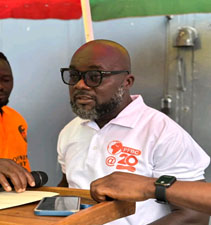
The President of the Concerned Liberian International Business Organization, Moses Chayee has expressed concerns over what he describes as systemic neglect of Liberian-owned businesses in national economic policies, including the allocation of the national budget.
Speaking on the Liberian Business Hour, Mr. Chayee asserted that each time the national budget is passed, foreign-owned businesses appear to benefit disproportionately, often gaining access to lucrative government contracts, procurement of modern office equipment or supplies, and improved operational resources. According to him, this trend continues to widen the gap between foreign competitors and struggling local enterprises.
He pointed out that essential public institutions, including the country’s main library and other key sectors, remain underfunded and poorly prioritized, while significant government spending is directed toward items such as new vehicles and administrative supplies that largely benefit foreign vendors.
Mr. Chayee also questioned the level of corporate social responsibility demonstrated by concession companies operating in Liberia. He noted that while these companies benefit from the country’s natural resources and economic opportunities, their contributions to local communities remain minimal. He disclosed plans by his organization to engage the Legislature to ensure that concession agreements include stronger obligations toward national development and community support.
Addressing the broader business environment, the CLIBO President emphasized that Liberian entrepreneurs face immense challenges, including high social and financial responsibilities. Unlike many foreign investors, he said, local business owners often support extended families, fund education for relatives, and shoulder community obligations, all while trying to sustain their enterprises.
He stressed that any Liberian who manages to operate a business consistently for five years under such conditions deserves national recognition and support.
“The government needs to trust its people,” he said, urging authorities to identify and empower credible Liberian-owned businesses that have demonstrated resilience and integrity over time.
Mr. Chayee further proposed the creation of a structured support system to strengthen local businesses, suggesting that even empowering a small percentage of committed Liberian entrepreneurs could meaningfully boost employment and economic growth. He argued that such efforts would help build a viable middle class, something he believes Liberia currently lacks.
Drawing comparisons with countries like Ghana and Nigeria, Mr. Chayee noted that strong middle classes in those nations have contributed to economic stability and national development. In contrast, he warned that Liberia’s widening gap between the rich and the poor continues to drive rising poverty levels.
He concluded by urging the government to adopt policies that prioritize Liberian businesses, strengthen economic inclusion, and foster a balanced economy capable of supporting long-term national development.
The Small Business Empowerment Act
The budget includes a requirement under the Small Business Empowerment Act that at least 25% of procurement contracts be awarded to Liberian Businesses.
This mandatory procurement allocation in the budget is intended to support local entrepreneurs and reduce reliance on foreign firms.
The 2026 National Budget ensures that at least 25% of the procurement budget for all spending entities, including State Owned Enterprises (SOEs) is allocated to Liberian-owned businesses to cover goods and services. The FY 2026 budget contains over four hundred 467 million for procurement, with US$116.8 million of this amount directly going to Liberian-owned businesses, according to the law.
However, while this act remains a good tool to support and empower Liberia-owned businesses, implementation remains a major challenge as several government spending entities, including SOEs, have defaulted in fulfilling this act.
This longstanding neglect has raised red flags among some Senators up Capitol Hill, notably Senator Amara Konneh of Gbarpolu County and Senator Francis Dopoh of Rivergee County.