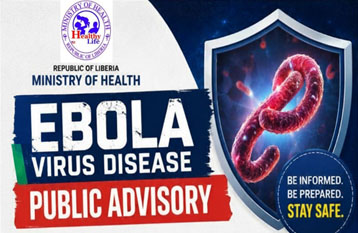
Authorities at the Ministry of Health (MoH) have issued a fresh Ebola alert.
The alert comes following reports of a new Ebola Virus Disease outbreak in Ituri Province, eastern Democratic Republic (DR) Congo. The report triggered renewed public concern over whether the country is truly prepared to confront another deadly epidemic.
Although health authorities insist that no confirmed Ebola case has been detected in Liberia, the announcement has reopened painful memories of the devastating 2014–2016 Ebola crisis that killed thousands of Liberians, and exposed major weaknesses within the country’s healthcare system.
Critics say, the latest alert should serve as more than a routine warning, but rather a serious test of the government’s ability to respond swiftly and effectively to another regional health emergency.
In a statement released Saturday, May 16, MoH said, it is monitoring developments in collaboration with international partners, including the World Health Organization, Africa CDC, and the National Public Health Institute of Liberia.
However, public health observers argue that despite years of promises and donor-backed reforms, many county health facilities still face shortages of medical supplies, protective equipment, trained personnel, and emergency response resources.
The ministry acknowledged that Liberia’s previous Ebola experience reinforced the importance of vigilance, rapid response, community awareness, and stronger public health systems.
Yet, many Liberians remain skeptical about whether lessons from the last outbreak have truly been implemented beyond official statements and workshops.
Health authorities claim that surveillance systems, laboratory capacity, border monitoring, and healthcare worker training have been strengthened since the Ebola epidemic.
But concerns remain over porous border crossings, weak rural healthcare infrastructure, and limited emergency logistics, especially in remote counties where access to healthcare remains a major challenge.
The alert comes at a time when the country’s health sector continues to struggle with funding gaps, overcrowded hospitals, and persistent complaints from healthcare workers regarding salaries, medical equipment, and working conditions.
Some analysts warn that another major outbreak could quickly overwhelm the fragile health system if urgent investments are not made.
MoH said, Ebola spreads through direct contact with infected bodily fluids, contaminated surfaces, and infected animals.
Symptoms include fever, vomiting, diarrhea, weakness, abdominal pain, and in severe cases, internal or external bleeding.
Authorities have meanwhile, urged citizens to maintain preventive measures, including regular handwashing and immediate reporting of suspected illnesses.