By: Godgift Harris
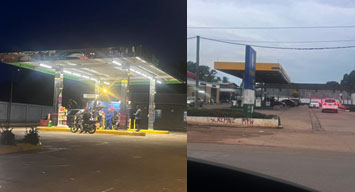
Growing frustration is mounting among commercial drivers and ordinary citizens as the prices of gasoline and fuel sold on the streets of Monrovia continue to rise sharply, raising fresh concerns about the Government of Liberia’s ability to regulate petroleum products and protect consumers from exploitation.
Across several communities in Monrovia, gasoline being sold on sidewalks by informal vendors commonly referred to as “black market fuel sellers” has reportedly climbed to LD$1,030 per gallon, while fuel prices are reaching LD$1,050 per gallon, according to commercial drivers who depend heavily on daily fuel purchases to sustain their businesses.
The rising prices have begun to place enormous pressure on transport operators, particularly “keke” riders, taxi drivers, and commercial vehicle operators who form the backbone of Liberia’s public transportation sector.
Many of them say the situation could trigger a new wave of transportation fare increases beginning Tuesday, March 17, 2026, a move that could further deepen the economic burden on already struggling Liberian commuters.
Drivers Sound the Alarm
Speaking to reporters across several commercial transport hubs in Monrovia, drivers expressed growing frustration over what they describe as the government’s failure to control fuel prices on the streets.
“We are buying gasoline from the sidewalk for 1,030 Liberian dollars, and fuel is now 1,050,” said one commercial keke rider, who requested anonymity out of fear of possible retaliation from authorities or fuel dealers.
He warned that the rising cost of fuel leaves transport operators with little choice but to increase transportation fares in order to survive.
“If things continue like this, we will have no option but to increase transport prices starting Tuesday.
The cost is too high for us to continue operating the same way,” he said.
Taxi drivers echoed similar concerns, noting that fuel costs account for the largest portion of their daily operational expenses.
“When fuel goes up, everything goes up,” another driver explained.
“Passengers will complain, but they must understand that we cannot run our vehicles without fuel.”
Government under scrutiny,
the situation has reignited criticism of the Government of Liberia, particularly its regulatory agencies responsible for monitoring petroleum pricing and distribution across the country.
Some drivers argue that the widespread sale of gasoline on sidewalks reflects a deeper regulatory failure within the fuel distribution system.
According to them, if official gas stations were adequately supplied and prices properly monitored, the black market trade in fuel would not thrive at the level currently seen in Monrovia.
“Government does not have control over transportation in Liberia,” one commercial driver claimed. “When fuel prices increase like this, it affects everyone.”
For many Liberians, the rising sidewalk fuel prices symbolize broader economic management challenges facing the country.
Commerce Ministry Adjusts Aviation Fuel Price,
the debate over fuel pricing intensified further following a recent announcement by the Ministry of Commerce and Industry, which disclosed an increase in the price ceiling for Jet A-1 aviation fuel.
In a petroleum products monthly price circular issued on March 14, 2026, the ministry revealed that the price of aviation fuel had been increased by US$2.65, setting the new ceiling price at US$7.57 per gallon.
The circular was signed by Magdalene Ellen Dagoseh, Minister of Commerce and Industry, and Amos B. Tweh, Managing Director of the Liberia Petroleum Refining Company.
According to the document, the adjustment took effect March 14, 2026, following consultations between the ministry and the management of the petroleum regulatory authority.
Officials say the decision forms part of government efforts to regulate petroleum product pricing while maintaining stability within the national fuel supply chain.
“The Ministry of Commerce and Industry, in close consultation with the management of the Liberia Petroleum Refining Company (LPRC), has announced that the price of Jet A-1 has been adjusted by two United States dollars and sixty-five cents,” the circular stated.
Authorities further indicated that inspectorate teams would monitor compliance with the newly approved price ceiling to prevent arbitrary price increases at fuel pumps.
“The Ministry of Commerce and Industry Inspectorate Team will be closely monitoring the approved ceiling price to avoid arbitrary hikes in the pump price of Jet A-1,” the circular added.
Aviation sector raises Concerns, despite the government’s assurances, aviation stakeholders say the increase could have far-reaching consequences for Liberia’s fragile aviation sector.
Industry experts warn that higher aviation fuel costs may translate into rising airline operational expenses, which could ultimately be passed on to passengers through increased ticket prices.
Airlines operating at Roberts International Airport and James Spriggs Payne Airport could face additional financial pressure as global aviation costs continue to rise.
Fuel represents one of the largest operational costs for airlines worldwide, and even modest price increases can significantly affect airline profitability and ticket affordability.
Given Liberia’s relatively small aviation market, industry observers warn that airlines may have limited capacity to absorb higher fuel costs without passing them on to travelers.
Public Demands Transparency
Beyond aviation concerns, the price adjustment has sparked wider debate among economists, civil society groups, and consumer advocates who are calling for greater transparency in the government’s petroleum pricing system.
Critics argue that the government has yet to fully explain how petroleum prices are calculated or what international benchmarks are used to determine local adjustments.
Without a clear pricing formula, they say the public may struggle to understand why fuel prices continue to fluctuate.
Some analysts have called on authorities to publish detailed breakdowns of petroleum pricing structures, including import costs, taxes, storage charges, and distribution margins.
Such transparency, they argue, would strengthen public trust and help consumers better understand the economic realities influencing fuel prices.
Memories of Past Price Shocks, for many Liberians, the current fuel price pressures revive memories of economic challenges experienced during the administration of the Congress for Democratic Change, when citizens faced significant increases in the prices of essential commodities such as rice and gasoline during the COVID‑19 pandemic.
Several citizens interviewed say the rising sidewalk fuel prices appear to reflect similar economic strains.
“When COVID came, the prices of rice and gasoline increased.
We are seeing the same situation again,” one market
woman said.
Economists warn that rising fuel prices whether in aviation fuel or gasoline sold in the local market can trigger widespread economic consequences.
Transportation costs influence the price of nearly every commodity, from food and construction materials to consumer goods.
If transport operators follow through on plans to raise fares this week, ordinary Liberians could soon face higher costs for daily commuting, market transport, and goods distribution.
Liberia’s economy remains heavily dependent on road transport and imported goods, making fuel prices a critical factor in the broader cost-of-living equation.
As tensions over fuel prices continue to build, attention is increasingly turning toward the Government of Liberia and its ability to stabilize the petroleum market while protecting consumers.
The key challenge facing regulators will be balancing global petroleum market realities with domestic affordability and economic stability.
For thousands of commercial drivers and ordinary commuters across Monrovia, however, the situation is far less theoretical.
Their immediate concern is simple: how to keep vehicles on the road and food on the table while fuel prices continue to climb.
If current trends persist, Liberia could soon face not only higher fuel prices but also rising transportation costs, deepening economic pressure on a population already struggling with the high cost of living.