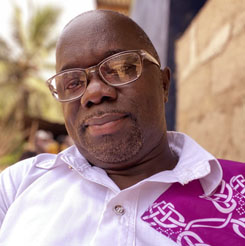
The University of Liberia Department of Communication and Media Studies Chairman, Euriah M. Togar, has reminded Media Leaders, Editor-In-Chief, Managing Editors and Senior Managers, that they are the ones who shape the daily information diet of Liberia.
Mr. Togar wondered whether media executives and managers are managing newsrooms, or managing institutions that shape democracy.
The UL Department of Communication and Media Studies Chairman made these remarks on Friday, January 3, 2026, at a one-day Strategic Media Management Seminar, held on the UL Capitol Hill Campus in Monrovia.
Mr. Togar noted that most professionals in the field of journalism were trained to think of media as content; adding, “But in reality, media is power, economic power, political power, and agenda-setting power.”
According to him, yet despite this reality, across Africa and particularly in Liberia, many media houses are still managed as if they were small projects, not strategic national institutions.”
He told the participants that the seminar has been organized by the Department of Communication and Media Studies under the Amos C. Sawyer College of Social Sciences and Humanities at UL, at the time when media organizers are under pressure from three directions at once- political influence, economic survival, and digital disruption.
Mr. Togar said political influence in Liberia is not abstract, noting that it is experienced daily through selective access to public information, pressure from powerful office holders, threats of lawsuits, and strategic use of government advertising as leverage.
“ In such a climate, editorial independence is constantly tested, and journalists are often forced to choose between professional integrity and institutional survival,” he added.
The UL Communication and Media Studies Chairman further termed economic survival as being equally unforgiving because many Liberian media houses operate with thin margins, irregular advertising, and heavy dependence on patronage.
This situation, he indicated, creates a system in which newsrooms are vulnerable to influence, as reporters are poorly paid, and ethical compromises become normalized as a way of staying afloat.
For digital disruption, Mr. Togar said it has added a third layer of instability as audiences have moved to Facebook, WHatSapps, and TihTok faster than media institutions have been able to adapt.
He emphasized that advertising revenue is shifting to global technology platform while misinformation spreads faster than verified news; and as a result, traditional newsrooms are losing both attention and income at the same time.
Mr. Togar also noted that in many media institutions, managing editors now sit between two fires- the editorial mission on one side and the financial reality on the other.
He lamented: “Yet too often, we have not given any editors and managers the strategic tools to navigate this tension. We have produced excellent journalists (hopefully), but we have not produced enough media executives who understand the strategy, governance, sustainability, and risk management.”
Mr. Togar however encouraged media leaders and managers not to allow reporters to decide news judgment alone because that decision rests squally on those leading the processing of information diet which the public relies on.
The seminar drilled participants on the topics, “Pillars of Strategic Media Management, Raising Money Through Innovation ( Resource Mobilization for Sustainable Media Management), and Media Business Vs Media Ethics.”
Presenters included- Mr. Jefferson Massah, Media Development Specialist; Mr. George Sarwah Stewart, Project Officer-Joe Mulbah Center for Journalism & Public Relations, and Mr. Frank Sainwarla- Coordinator JMC/ DCMS/ACS/UL.