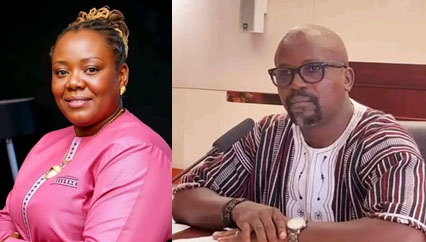
Former Public Works Minister, Ruth Coker Collins, has publicly questioned her exclusion from the ongoing National Infrastructure Conference in Gompa City, Nimba County.
Madam Collins described the omission as concerning, given the importance of continuity, institutional memory, and professional inclusion in infrastructure development agenda.
In an open letter addressed to the Minister of Public Works, Roland L. Giddings, Madam Collins said, her concern was raised “with respect and a sincere sense of national responsibility.”
He noted: “Infrastructure development is a continuous national endeavor that should transcend political administrations and party lines. As the immediate past Minister of Public Works and a career engineer, who has served this country diligently, I was concerned to note that I was not invited to participate in this important national dialogue.”
She said national infrastructure planning benefits from the inclusion of former ministers, and senior professionals, whose experience can enrich policy discussions, strengthen collaboration, and ensure continuity in long-term development efforts.
Collins said her statement was not intended as criticism, but as a good-faith appeal for broader professional participation in future national engagements. She reaffirmed her willingness to support infrastructure development in any capacity where her expertise may be useful, underscoring that national development is a shared responsibility.
Her remarks come as President Joseph Nyuma Boakai, officially opened the National Infrastructure Conference on Monday, January 19, 2024.
Boakai delivered a wide-ranging address that framed infrastructure development as central to economic recovery, social equity, and national renewal.
His audience included cabinet members, legislators, development partners, diplomats, traditional leaders, academics, private sector representatives, and members of the Liberian diaspora.
Pres. Boakai described the conference as the result of nearly two years of preparation, adding: It was convened in response to the visible deterioration of Liberia’s infrastructure, much of it a lingering legacy of years of conflict. “This conference is convened to foster an honest national discussion—one that confronts the decay of our infrastructure, identifies what needs repair, and charts a path toward rebuilding smarter and better.”
Pres. Boakai said infrastructure is not merely about physical assets, but about people, dignity, and opportunity. He noted that roads, bridges, energy systems, and water infrastructure are lifelines that shape productivity, confidence, and inclusive growth.
He acknowledged that for years, roads, public buildings, electricity supply, and access to safe water and sanitation had deteriorated, placing daily hardship on citizens and constraining economic growth. However, he framed the post-conflict rebuilding process as both a development challenge and an opportunity for national healing.
“We must build back and build better,” Boakai said, stressing that future infrastructure must be resilient, climate-smart, job-creating, and globally competitive, while leaving no Liberian behind. He aligned the conference with his administration’s ARREST Agenda, Africa’s Agenda 2063, and the Sustainable Development Goals, calling for coordinated, forward-looking infrastructure systems that leverage technology and innovation.
As he formally declared the conference open, Pres. Boakai reminded participants that infrastructure is a foundation of prosperity.
While the conference proceeds with high-level discussions on rebuilding infrastructure, Madam Collins’ open letter has introduced a parallel conversation about inclusion, professional continuity, and the role of past leadership in shaping the country’s development trajectory, an issue that resonates with the broader theme of shared national responsibility as stated throughout the gathering.