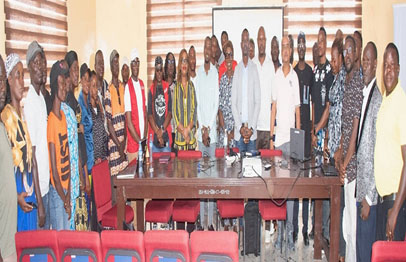
The Liberia Revenue Authority (LR), through its Domestic Tax Department, has ended a three-day stakeholder engagement initiative in Buchanan, Grand Bassa County.
The event marks the start of Phase Three of the Real Property Tax Expansion Project in Grand Bassa County.
The project, according to a release, is supported by the United Nations Development Program (UNDP) with funding from the Government of Sweden.
It is part of the Authority’s ongoing efforts to strengthen real property tax administration and improve revenue generation at the county level. Phase Three of the initiative targets Electoral District #3, and focuses on key technical activities, including digital property mapping, data cleansing, system tracking, and property valuation.
The project seeks to ensure that 50 percent of all revenues collected from real property tax in the county are disbursed for local development programs, in line with the Local Government Act of 2018, while promoting decentralization, transparency and efficiency.
The Local Government Act of 2018 mandates that up to 50 percent of revenues generated from real property taxes be returned to counties to support local development programs and projects.
At the stakeholder dialogue, LRA Commissioner for Domestic Tax, Margaret P. Krote, described the initiative as a transformative approach to tax administration.
“This is about making people understand that the taxes they pay will come back to them. Development will no longer feel distant, but will be seen and experienced right here in the county.” She spoke of engagement being critical to raise awareness about the project; its benefits, and the role of citizens in supporting tax compliance.
Madam Krote commended UNDP for its continued support, describing the organization as a key partner in advancing the project.
Grand Bassa County Superintendent Karyou Johnson, welcomed the initiative.
Johnson recommitted his administration to transparency, and equitable distribution of revenues generated from property taxes between the local and central governments.
He urged residents to actively participate in the process, noting that increased compliance would directly contribute to improved development outcomes in the county.
UNDP Program Coordinator for Decentralization, Eric Boykai, underscored the importance of the stakeholders’ engagement in strengthening local governance and enhancing domestic revenue mobilization.
The dialogue brought together a cross-section of stakeholders, including local leaders, business representatives, civil society organizations, youth and student groups, transport unions, motorcyclists, and market women.
The project is expected to be completed in July this year, and is being implemented by KWARECOM, a local consultancy firm with expertise in property data management, digital mapping, and real property tax system development.
The real property expansion project represents a significant step toward decentralizing revenue collection and ensuring that communities directly benefit from taxes generated within their jurisdictions.