Landmark Assessment On Gender Discriminatory Laws Validated
By Godgift Harris
The government has taken a significant step toward eliminating gender discrimination in its legal framework.
This decision, according to our reporter, followed the validation of a comprehensive assessment on gender discriminatory laws.
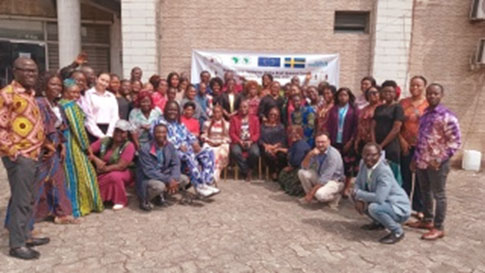
The two-day national stakeholders’ workshop, held on August 14-15, was jointly organized by the Ministry of Gender, Children and Social Protection (MGCSP), and the Law Reform Commission (LRC), with support from UN Women-Liberia.
The gathering brought together over 30 institutions, including government ministries, members of the Legislature, the Liberia National Bar Association (LNBA), the Association of Female Lawyers of Liberia (AFELL), civil society, academia, and traditional leaders.
The nationwide legal review examined country’s constitutional, statutory, and customary laws through a gender lens, identifying provisions that directly or indirectly discriminate against women and girls.
It also evaluated Liberia’s commitments under international and regional frameworks, such as the Convention on the Elimination of All Forms of Discrimination Against Women (CEDAW), the Maputo Protocol, and the Beijing Platform for Action.
MGCSP Deputy Minister for Research, Policy and Planning, Curtis V. Dorley, spoke of the need for urgent reforms.
“Despite our achievements, legal gaps and discriminatory provisions remain in both statutory and customary laws, thus preventing women and girls from realizing their full rights.
We must work together to ensure that the principle of equality and non-discrimination are reflected in our laws,” Dorley said.
Counselor Ramses T. Kumbuyah of the Law Reform Commission, talked about the participatory approach of the review.
Kumbuyah suggested that lawmaking must reflect the realities of the people, rather than rely solely on desk reviews.
LNBA President, Bornor M. Varmah, pledged the LNBA commitment to ensuring the recommendations are implemented.
“Engagement with the legislature will be critical, as they hold the mandate to enact the necessary reforms.
We will continue working closely with the ministry, legislature, and partners to ensure these recommendations are translated into laws that protect, and promote the rights of all Liberians,” he assured.
In the findings, Liberia’s legal framework still contains provisions that undermine women’s rights, particularly in marriage, inheritance, and property. Discriminatory gaps were identified in 14 of the 19 laws reviewed.
Among the most pressing concerns are constitutional restrictions on citizenship based on race, lack of explicit protection against marital rape and harmful traditional practices, child marriage allowances and the absence of enforceable measures to increase women’s political participation.
UN Women Liberia’s Deputy Representative, Ms. Yemi Falayajo, hailed the validation as a milestone.
“This assessment brings together, for the first time, all the evidence on discriminatory laws into one nationally owned reference point. It provides an evidence-based foundation for reform and a clear path to align country’s laws with its constitutional principles and international commitments,” she noted.
UN Women has pledged to continue supporting multi-stakeholder engagements, particularly with the legislature, to raise awareness and back gender-sensitive legal reforms.
The validation workshop, which followed consultations in Monrovia, Grand Cape Mount, Bong, and Grand Gedeh counties, consolidates fragmented reform efforts into a single roadmap aimed at advancing gender equality in country’s legal system.