Macpherson C. Marbiah writes
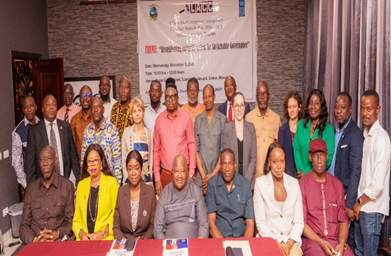
The Liberia Anti-Corruption Commission (LACC) with support from the United Nations Development Program (UNDP), has officially unveiled a ‘Strategic Plan.’
The plan will chart a new institutional direction for the next five years (2026-2030).
The plan was launched under the theme: “Strengthening Integrity System for Sustainable Governance.”
It is not merely a document, but a reaffirmation of the nation “vision,” where public service is synonymous with transparency, accountability and justice.
The document outlines LACC’s priorities, strengthens its institutional framework, as well sets measurable goals to combat corruption in all its forms.
At the recent official launch in Monrovia, President Joseph Nyuma Boakai’s senior advisor, Dr. Augustine Konneh, labelled the document as being more than a roadmap, but a declaration of intensified purposed, aligning anti-corruption efforts directly with the country aspirations for development and growth.
The document is enshrined as the ARREST Agenda for Inclusive Development (AAID).
Konneh said the fundamental pillar of government’s agenda is the delivery of tangible results for the Liberian people, as such, those delivery cannot, and will not be realized without absolute integrity and transparency.
He then assured Liberians, and development partners of government’s full commitment to foster a governance environment where public trust is not merely a slogan, but a living reality.
Konneh told the gathering that maintaining the integrity of government’s processes is essential to securing the needed investment; partnership, and stability for sustainable growth.
“This is a nationalistic duty. Every resource allocated, policy formulated, and contract signed, must withstand the brightest light of public scrutiny. The commitment to fight corruption is not an option; it is the sacred prerequisite for fulfilling our social contract with the people,” he said.
Konneh added: “Being the custodians of public purse, and the architects of the country future; the effectiveness of LACC’s Strategic Plan ultimately rests on the shoulders of all government officials. As such, they should demonstrate exemplary leadership, which is non-negotiable at all times.
LACC Executive Chairperson, Counselor Alexandra K. Zoe, said corruption greatly undermines governance, rule of law and service delivery. Therefore, the plan seeks to strengthen systems, and policies that prevents mismanagement of public resources, while promoting good governance, and ethical conduct.
Madam Zoe said the Plan is designed to enhance collaboration with government institutions, civil society organizations, and international partners.
The aim is to ensure that anti-corruption efforts are not only effective, but sustainable.
Key priorities and targets for the strategic plan include prevention; investigation; the construction of its new headquarters; enforcement; recruitment as well as public awareness on corruption related issues.
At present, 44 corruption cases have been investigated, with 14 indictments, four convictions, as 25 corruption risk assessment was conducted.
Madam Zoe said the construction of the new headquarters, which cost US$27.89 million, is part of the institution five-year strategic plan to enable the institution become more effective in tracking and preserving corruption related information.
UNDP Resident Representative, Aliou Mamadou Dia, informed the gathering that corruption remains one of the principle obstacles of Liberia’s growth and development, as it directly hampers the delivery of quality, essential services and threatens the livelihoods of its citizens.
Dia told the gathering that the plan is an opportunity for everyone to reflect on how to transform the LACC into a robust, and dynamic institution, capable of implementing its mandate effectively.
2024 marked a pivotal moment in Liberia’s anti-corruption journey, as the country’s global ranking improved from 25/100 to 27/100, and from 145th to 135th out of 180 countries.
Macpherson C. Marbiah writes/0886442881-077725