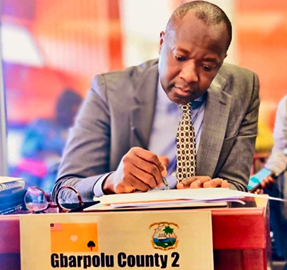
A major economic agreement that would see railway used to export iron ore from Guinea is been fast-track at Senate with a Gbapolu Senator, Amara Konneh, voicing his support, while highlighting concerns.
The agreement, known as the Concession and Access Agreement (CAA), according to a release, was signed by the government, and Ivanhoe Liberia Limited on July 5, 2025.
It grants the American-owned company, Ivanhoe Atlantic Incorporated rights to upgrade and use Liberia’s railway and port facilities in Nimba, Bong, and Grand Bassa counties to transport Guinean iron ore.
Konneh said his support for the investment called it a potential “lead the way in new commercial diplomacy” with the United States.
He said the substantial economic benefits expected for Liberia totals over US$1.4 billion in fees, taxes and job creation during the construction and operation phases.
Liberia has already received US$7 million, and US$30 million from Ivanhoe. The government will receive a per-ton fee for ore transported, at the rate of US$2.05 per ton.
Ivanhoe is committed to rehabilitate the Buchanan Quay, the Buchanan Handling Facility, the Nimba Tokadeh Facility, and the haul road.
A Community Fund will see payments rising to US$5 million per year after five years, split among Nimba (40 percent), Grand Bassa (35 percent), and Bong (25 percent).
Targets are set to increase Liberian representation in management, aiming for 50 percent in five years, and 70 percent in ten years.
Despite his support, Sen. Konneh urged his colleagues to scrutinize several risks before ratifying the deal.
He plans to formally submit the concerns to the Joint Committee reviewing the contract.
Top risks identified are the high volume of Guinean exports (up to 30 million tons per year) could dominate the railway and port access, making it harder and less competitive for Liberian domestic miners to use the infrastructure; the total recurring fee (about US$2.05 per ton) is described as “low-to-moderate” compared to similar corridors in Africa. The deal also includes a small, fixed US$500,000 annual customs fee that replaces per-ton revenue, limiting Liberia’s financial benefit as export volume grows and a 15-year “Preservation Period” will freeze the fiscal terms, preventing Liberia from adjusting fees or capturing greater revenue if commodity prices or demand increase significantly.
Also, Konneh said, concerns were raised about the penalties that could be failing to meet localization and procurement targets ($50,000 per year) are too small to be a real incentive for a project of this scale.
Sen. Konneh added that the deal is a “significant opportunity” that aligns with President Nyuma Boakai’s development goals.
He said the final agreement must be structured to genuinely benefit Liberia by protecting Liberian jobs and local producers, safeguarding the nation’s fiscal interests.
Konneh has meanwhile urged the Senate to address his recommendations, and also called for transparency, asking for all investment instruments to be published so the public can understand them.