By Yassah J. Wright
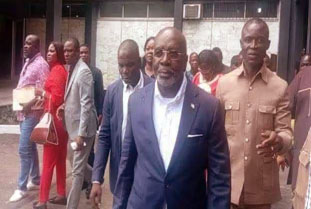
The Former House Speaker, Jonathan Fonati Koffa, has rejected the change of venue for the hearing of the arson case.
Koffa, though expressed his preparedness to defend himself in the ongoing Capitol Building arson trial in any venue the court may decide, he outrightly rejected attempt to change the venue outside the country.
He expressed confidence that he and his co-defendants will ultimately prevail based on the evidence.
Koffa made the remarks on Thursday, March 5, while speaking with the media at the Supreme Court following a hearing before Justice-in-Chambers Yussif D. Kaba.
The hearing centered on a writ of prohibition filed by Koffa, and several co-defendants, in which the accused lawmakers challenged a decision by Roosevelt Z. Willie, Resident Judge of Criminal Court ‘A’ to disband the jury in the arson trial.
Shortly after the court appearance, Koffa criticized attempts to alter the course of the proceedings after the trial process had already begun.
“I think the request is problematic. It is like starting a game, and then someone suddenly decides they want to change the rules midway. That is not consistent with what our constitution provides,” Koffa told reporters.
He said, the case should continue based on the evidence already presented, rather than revisiting procedural issues that could delay the process.
He said, the issue before the court has already been determined based on the available evidence.
“What we want is straightforward, the case should be tried based on the evidence.”
Ready to defend case anywhere
Koffa also addressed discussions about the possible relocation of the trial venue due to public attention surrounding the case.
While acknowledging the high level of media coverage, he said, public interest should not affect the judicial process, emphasizing that he is ready to proceed wherever the court deems appropriate.
“Wherever they take this case, we will still win it, because the evidence is on our side, but not outside the country.”
He added that while he respects the authority of the court, he remains opposed to procedural steps that could unnecessarily delay the trial, saying: “What I am not willing to accept, are delays or procedural games meant to prolong the process.”
He further emphasized the need for the evidence to be presented, and examined by the court or the jury, and then a verdict should be reached.