By: Domingo Dargbeh
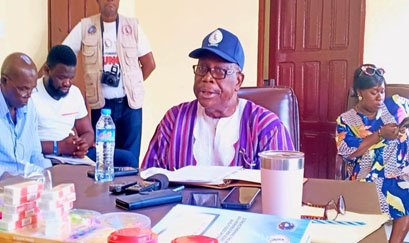
In a recent press statement, Jackson J. Paye, the former Executive Director of the Liberia Refugee Repatriation and Resettlement Commission (LRRRC), has expressed strong support for the Liberian government’s diplomatic stance regarding the ongoing border conflict with the Republic of Guinea.
Paye commended President’s Joseph Boakai and his administration for their measured response, describing it as an “appropriate” handling of the dispute.
He acknowledged the emotions and youthful exuberance displayed by various sectors of the population during this critical time in Liberia’s history.
He cautioned against allowing these sentiments to cloud judgment, urging citizens to reflect on lessons learned from Liberia’s past and the experiences of other nations, including major global powers like the United States.
“No dispute or conflict can be won on the battlefield,” he asserted, stressing the importance of negotiation over warfare. Referencing the ongoing war between Russia and Ukraine, Paye noted that despite the devastation experienced over the past four years, the ultimate resolution will only be achieved through dialogue.
He reiterated his support for the government’s current approach, highlighting the deep cultural and tribal connections that bind the people of Liberia and Guinea.
Paye suggested that traditional leaders on both sides of the border could play a crucial role in mediating the situation, given the shared customs and heritage of the communities in Lofa County and adjacent Guinean territories.
“When there is conflict between two family members in one house, one does not resolve the issue by breaking the house down,” he remarked, advocating for tolerance and respect as strengths, not weaknesses. As a former high-ranking official in Liberia’s armed forces and national security apparatus, Paye acknowledged the complexities of the situation and the necessity for the government to maintain a level of confidentiality regarding security matters.
He stressed that the public’s right to information must be balanced with national security concerns, urging the government to provide transparent updates that do not compromise safety.
Drawing from his experiences in the United States, Paye called for unity among Liberians, regardless of political affiliations, during this challenging period. He noted that even in a vibrant democracy like the U.S., media coverage is often measured during crises and encouraged a similar approach in Liberia to avoid misinformation and speculation.
Paye appealed to government officials to execute their responsibilities effectively and efficiently, stressing the need to allocate resources wisely to support agencies such as the LRRRC and the Liberia Immigration Service, particularly in assisting those displaced by the ongoing crisis.
While expressing his support for the President’s decision to keep the Armed Forces of Liberia in the barracks during this time, Paye underscored the importance of a well-prepared military, cautioning against hasty deployments that could reignite tensions.
He highlighted the sacrifices and struggles of the past, urging citizens to remain vigilant against militaristic rhetoric that could lead to further conflict.
In conclusion, Paye reaffirmed his belief in the government’s diplomatic approach, underscoring the importance of stability, negotiation, and community solidarity in navigating the challenges posed by the border conflict with Guinea.
His statement serves as a reminder of the delicate balance required in addressing national issues while prioritizing peace and fostering relationships with neighboring countries.
I have read so many articles or reviews on the topic of the blogger lovers but this paragraph is in fact
a fastidious post, keep it up.