By Godgift Harris
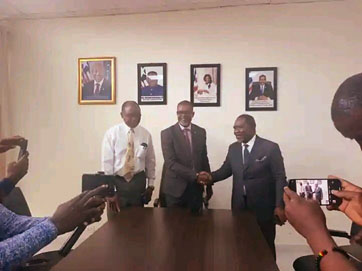
The political temperature concerning the worsening employment intensified on Wednesday, November 26, 2025.
The flames came about when Montserrado County Senator Abraham Darius Dillon, and Labor Minister Cooper Kruah, held a “strained and uneasy solidarity meeting.”
In spite of public attempts to project unity, the situation went otherwise.
The engagement facilitated by Grand Gedeh County Senator Thomas Yaya Nimely, Chair of the Senate Committee on Labor, came after days of open disagreement triggered by Senator Dillon’s criticisms of the Labor Ministry.
Dillion alleged that the Ministry’s failure to protect Liberian workers, and prevent abuses in the issuance of work permits for foreign employees.
Mr. Kruah a lawyer by profession, attempted to downplay accusations of
political tension said, he had cautioned members of his political circle to understand that Dillon was “performing his constitutional mandate, and not acting to undermine anyone.”
But independent observers say Kruah’s remarks expose deepening divisions within government ranks at a time when public confidence in the Ministry of Labor continues to erode.
Sen. Dillon insisted that the sit-down did not reflect any compromise of his oversight role.
“I hold nothing against Mr. Kruah. My quest is to ensure Liberians get the jobs they deserve. I will not back down from my advocacy.”
Dillion’s comments highlighted a broader national frustration: that while unemployment soars, many Liberians say they are being sidelined in their own job market.
Across Monrovia and its surrounding communities, businesses, especially supermarkets, retail outlets and construction companies are increasingly employing foreign nationals in positions Liberians say they are capable of performing.
Critics argue that the Ministry’s liberal issuance of work permits is enabling companies to import workers unnecessarily, often paying high fees to secure foreign labor, while Liberian workers earn lower wages or remain jobless entirely.
This, analysts note, creates a painful contradiction for an administration that promised to “rescue” Liberians from hardship.
The meeting ended without any concrete policy commitments from the Labor Ministry, leaving the public to wonder:
What immediate reforms will the Ministry implement to safeguard Liberian employment?
Will legislative pressure translate into action or is the “solidarity” engagement simply political window-dressing? And how long will Liberians continue watching foreigners occupy jobs they are qualified to perform?
For many, the answers remain unclear, but one reality is unmistakable, Liberia’s labor crisis is deepening and political meetings without firm solutions will do little to restore public confidence.