By Julius Konton
Pressure is reportedly mounting on the government to confront the legacy of mass atrocities, human rights abuses, and economic crimes that devastated the nation between 1989 and 2003.
As such, the Association of Female Lawyers of Liberia (AFELL), in collaboration with national and international partners, has convened a two-day Civil Society Organizations (CSOs) Transitional Justice Conference.
The conference under the theme: “Call to Action on Transitional Justice for Liberia Now,” was held at the Ministerial Complex in Congo Town.
The high-level gathering brought together transitional justice experts, survivors of civil conflicts, legal practitioners, civil society leaders, and international development partners, creating one of the most comprehensive platforms in recent years to reassess unfinished justice agenda.
In 2009, the Truth and Reconciliation Commission (TRC) documented widespread war crimes, crimes against humanity, sexual violence, and economic plunder, recommending the establishment of a War and Economic Crimes Court (WECC).
Despite these recommendations, and repeated calls from victims, and international human rights organizations, the country remains one of the few post-conflict countries without a dedicated judicial mechanism to prosecute such crimes.
Central to discussions at the conference was the urgent demand for the establishment of a War and Economic Crimes Court, not only to prosecute direct perpetrators, but also those, who financed and economically benefited from the conflict.
Participants want accountability be extended beyond battlefield actors to include individuals, who fueled violence through illicit economic activities.
Some of the speakers also underscored the importance of a survivor-centered approach to transitional justice, including reparations, psychosocial support, memorialization, and institutional reforms to prevent future conflict.
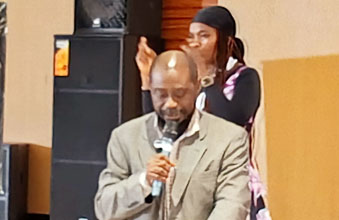
In his opening address Counselor Tiawan Saye Gongloe (TSG), spoke on the theme: “The Need for Continued Transitional Justice Processes in Liberia Today.”
He warned that democratic gains remain fragile without justice and accountability in the country.
“Punishment should not be limited only to those who pulled the triggers, but those, who financed war crimes and profited from bloodshed must also be held accountable. Without justice, peace remains incomplete and democracy vulnerable.”
He said transitional justice is not a one-time event, but an ongoing process essential to rebuilding public trust, strengthening the rule of law, and ensuring non-recurrence of conflict.
A moderated panel discussion, led by Counselor Bowoulo Taylor-Kelly, AFELL Vice President, provided expert reactions to Gongloe’s address, and explored pathways for advancing transitional justice
The distinguished panel included; Madam Elise Keppler, Executive Director, Global Justice Center;
Loretta Pope Kai, Past President, National Civil Society Council of Liberia; Binta Mansaray, Registrar, Residual Special Court for Sierra Leone; Lawrence Yealu, President-Elect, National Civil Society Council of Liberia and Dr. Simon Robbins, Senior Research Fellow, Center for Applied Human Rights, University of York.
Panelists drew lessons from international and regional experiences, including the Special Court for Sierra Leone, highlighting how delayed justice can still deliver accountability and national healing when political will aligns with citizen demand.