By Godgift Harris
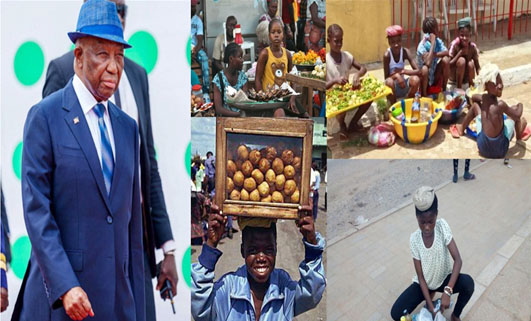
Authorities argue that street selling, specifically, between and among moving objects, including cars, exposes children to accidents…. while undermining school attendance and long-term learning outcomes.
Government has announced an immediate nationwide ban on children selling goods on streets and within residential communities.
The decision is part of government’s action to encourage the children to go to school and improve their lives.
It also warned parents and guardians, who violate the directive to face arrest, fines, or imprisonment.
The announcement is being presented as part of a broader effort to curb child exploitation, and reinforce Liberia’s education and child-protection laws.
Authorities argue that street selling, specifically, between and among moving objects, including cars, exposes children to accidents, abuse and criminal activity, while undermining school attendance and long-term learning outcomes.
Education Minister, Dr. Jarso Maley Jallah, said children should not be used as income earners for their families, rather, students to achieve quality education for brighter future.
Dr. Jallah said education is not street trading, therefore, it must remain the children’s primary responsibility.
“Children are not breadwinners, their place is in the classroom, not on the streets.”
She added: “The ban is consistent with national education policies, and existing child-welfare legislation.”
While the policy has been welcomed by some child-rights advocates, it has also triggered concerns over enforcement and its social impact.
The impact, is particularly on low-income households that rely on children’s street trading to supplement family income amid widespread unemployment and rising costs of living.
Several market women, and street vendors expressed distress following enforcement actions by city police in collaboration of the Liberia National Police. The police have meanwhile, begun removing sellers both adults and children from major streets corners.
As of Tuesday, December 16, some women, mainly the marketers wailed as LNP officers reportedly seized their goods.
The women claimed the move has cut off their only source of income during a “critical seasonal period.”
“This is the season when we sell to provide for our children,” one vendor said, adding: “there is no buying now, and by January 2026, schools will be asking for tuition fees.”
Critics say government has yet to outline concrete measures to cushion the impact on vulnerable families, such as social protection programs, school-feeding initiatives, or targeted economic support to help parents comply with the ban without deepening household hardship.
Child-rights organizations have cautioned that strict enforcement without parallel social interventions could inadvertently harm the very children the policy seeks to protect.
“Protecting children requires more than arrests,” one advocate noted, noting: “it requires tackling the poverty that forces families to depend on child labor for survival.”
Government has meanwhile, urged citizens to report cases of child exploitation.
It said the ban is part of a wider strategy to strengthen child welfare, and increase school enrollment nationwide.
However, observers say greater clarity is needed on how the policy will be implemented in both urban and rural areas; how authorities will distinguish between exploitative practices and survival-driven activities in impoverished communities.
As enforcement begins, analysts say the success of the policy will depend on whether the state can balance firm action with practical support systems that keep children in school without imposing additional burdens on the already struggling families.