By Godgift Harris
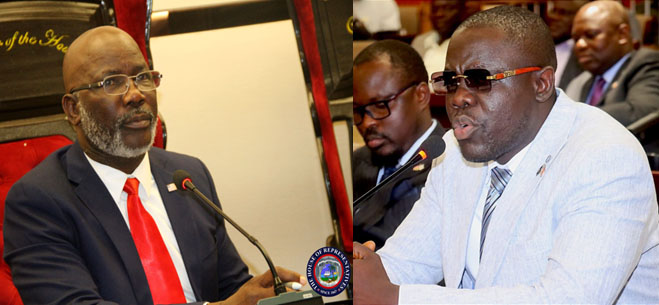
A leading social media voice aligned with the opposition Congress for Democratic Change (CDC), has come under fire for his “thoughtless statement against the government.”
Wantoe Teah, who Cdcians referred to as their only “bookman,’ accused President Joseph Nyuma Boakai of presiding over the “highest number of rape cases in post-war history.”
The assertion, posted on Facebook on February 23, has ignited political tension and triggered a wave of fact-checking that challenges the credibility of his statement.
The claim that sparked controversy
In his post, Wantoe alleged that the Boakai administration recorded 2,759 rape cases in 2024, and 1,735 cases within the first three quarters of 2025.
He further claimed that these figures represent, “the highest number of rape cases in our country’s history since the post-war period.”
The post quickly gained traction among CDC partisans, fueling criticism of the current government’s handling of sexual and gender-based violence (SGBV).
Wantoe also said, 1,485 of the reported 2024 victims were children under 18. He mentioned six sodomy cases recorded in 2025, heightening public concern.
However, a closer examination of verified statistics from the Ministry of Gender, Children and Social Protection, and international development reports, reveals a more complex historical picture one that contradicts his broader claim.
While the figures cited for 2024, and 2025, align with preliminary Gender Ministry data, cumulative records from previous administrations indicate significantly higher totals.
For example, the Ellen Johnson-Sirleaf Administration (2006 to 2018), over 7,000 cases.
The data showed that more than 7,385 rape cases were recorded nationwide.
In 2011 alone, 1,476 cases were documented, followed by 1,501 in 2012, and 1,215 in 2013. Even during the height of the Ebola crisis, hundreds of rape cases were reported annually.
Though comprehensive data from 2006 onward are not fully consolidated in public records, verified figures between 2010, and 2017, clearly exceed 7,000 cases.
Weah Administration: Recorded over 10,000 cases in just six years.
Rape statistics rose even higher in cumulative terms.
Reports indicate that between 2018, and 2023, more than 10,200 rape cases were recorded nationwide.
According to the Spotlight Initiative Liberia Results Newsletter (2019–2021), approximately 6,952 rape cases were documented between 2018, and 2021, alone, accounting for roughly 80 percent of reported SGBV cases during that period.
In 2022, authorities recorded 1,311 rape cases, followed by 2,007 cases in 2023, bringing the total under the Weah administration to over 10,270 cases.
These figures significantly outpaced the 4,494 cases recorded under the Boakai administration so far.
Boakai Administration:
4,494 cases to date, since taking office in 2024, Pres. Boakai’s government recorded 2,759 rape cases in 2024, and 1,735 cases between January and September, 2025, totaling 4,494 cases based on available data.
While the numbers are deeply troubling and underscored persistent sexual violence crisis, they do not exceed the cumulative totals recorded during either the Sirleaf or Weah administrations.
While Wantoe’s specific annual figures for 2024, and 2025, align with official releases, his broader claim that the Boakai administration holds the highest post-war total does not withstand scrutiny when compared with verified cumulative data from prior governments.
The controversy has sparked debate over responsible political communication, particularly from individuals who brand themselves as “intellectual authorities within their opposition parties.”
Many observers acknowledge Wantoe’s reputation as an articulate and well-read commentator, but caution that public figures must exercise diligence when presenting statistics to their followers online.
With 4,494 cases recorded in just two years under the current administration, the situation remains alarming regardless of historical comparisons.
Survivors continue to face challenges in accessing justice, medical care and psychosocial support.
Critics accuse Wantoe of “misleading the public
governance advocates,” and fact-checkers argue that Wantoe’s claim “lacks crucial context, and fails to compare cumulative multi-year data across administrations.”