By Godgift Harris
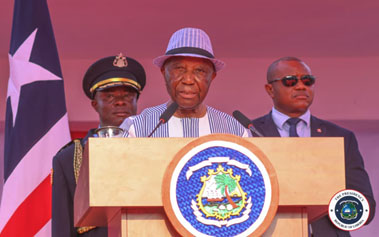
The media has historically played a central role in governance, transparency, and national development, but to ignore the Fourth Estate during such a major national address sends a worrying signal.
If it was deliberate, but then, it was shameful to omit the media in the President annual message.
President Joseph Nyuma Boakai’s third State of the Nation Address (SONA), delivered on Monday, January 26, 2026, triggered sharp criticism from media practitioners following the complete omission of the Fourth Estate from the President’s constitutional address.
Journalists, publishers, media owners and civil society observers, feeling embarrassed with shame looking
faces, say the failure to acknowledge the roles, contributions, or challenges of the media sector raises troubling questions about the Unity Party-led government’s commitment to press freedom and democratic accountability.
In a country where the media has historically played a central role in governance, transparency, and national development, critics argue that ignoring the Fourth Estate during such a major national address sends a worrying signal.
“In spite of the shame, the media remains one of the strongest pillars of democracy,” several media stakeholders voiced out.
“To exclude it entirely from the State of the Nation Address, is not just an oversight, but reflects a lack of policy focus on strengthening the information sector and protecting journalistic independence.”
The concern is heightened by the timing of the omission. Journalists continue to operate under difficult economic conditions, while facing persistent threats, limited access to information, and increasing pressure in the course of their work.
Media advocates argue that these realities deserved recognition in a speech intended to outline the nation’s progress and future direction.
Some observers have gone further, questioning whether the silence was accidental or a deliberate attempt to marginalize the Fourth Estate.
“This raises a fundamental question,” a media executive said. “Does the omission suggest an effort to silence or sideline the press?”
The issue gained further traction following a press briefing by Information Minister Jerolinmek Matthew Piah, on Tuesday, January 27, 2026.
Media practitioners expected the Ministry to address concerns arising from the SONA, particularly the exclusion of the media and broader press-related grievances.
Piah avoided the subject entirely, choosing instead, to focus on defending Pres. Boakai’s claim that his administration has created more than 70,000 jobs nationwide.
Critics argue that the government has failed to provide verifiable data to support the claim, noting that neither the Ministry of Labor, nor the Liberia Institute of Statistics and Geo-Information Services (LISGIS), has released official figures confirming the number.
Many Liberians also question the classification of informal activities as government-created jobs.
Riding commercial motorcycles, operating keke tricycles, or engaging in short-term public works, they argue, should not be presented as sustainable employment outcomes.
Others maintain that placing citizens on public buses or short-term engagements does not equate to long-term job creation capable of improving living standards.
John Gray, a student of the University of Liberia, called on government officials to provide accurate information to the President and the public.
“Government officials must be honest with the President,” Gray said.
“Liberians deserve the truth, not inflated figures that do not reflect the realities on the ground.”
As national debate over the 2026 SONA continues, media advocates have urged the Boakai administration to meaningfully recognize the Fourth Estate, acknowledge its contribution to national development, and articulate clear policies aimed at strengthening press freedom.
They argue that a democratic progress cannot be sustained without a free, independent, and respected media sector one that is recognized, not only in practice, but also in the highest national discourse.
The Fourth Estate has contributed meaningfully to national development, and must not be ignored by any government committed to democracy and accountability.