By: Godgift Harris
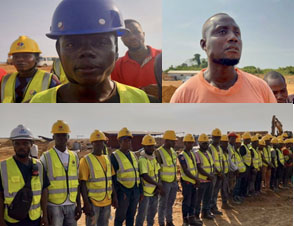
Resources Liberia Limited have leveled serious allegations of labor rights violations against the iron ore mining company.
The employees have raised fresh concerns about weak enforcement of labor laws within Liberia’s extractive sector and the government’s ability to protect workers from abuse.
The aggrieved employees mostly Liberians assigned to mining and construction sites linked to Bao Chico’s iron ore operations accuse the company of unsafe working conditions
Opaque contractual arrangements and practices they say undermine workers’ dignity and basic rights guaranteed under Liberian law and international labor conventions.
Speaking to journalists on the condition of anonymity for fear of retaliation, several workers described persistent challenges at job sites, including limited access to safe drinking water and poorly explained employment contracts.
According to them, contracts are often presented for signature without proper consultation, leaving workers unclear about their rights, benefits, or obligations.
“Sometimes they just bring papers and tell us to sign,” one worker, Peter Brown, said.
“No explanation, no copy for us. If you ask questions, you are seen as trouble.”
Beyond contractual concerns, workers complained of unsafe work environments, inadequate facilities, and excessive workloads without corresponding compensation.
They said complaints raised with supervisors are routinely ignored, creating what they described as a culture of silence and fear that discourages workers from speaking out about safety risks and exploitation.
Several employees also raised concerns about limited opportunities for training and promotion for Liberian workers, a situation they argue contradicts local content principles and raises questions about fairness and equality within the company’s operations.
“Our issue is not just employment,” another worker said.
“It is about respect, safety, and our rights as human beings. We want to work, but we also want to be treated fairly.”
The workers’ grievances come amid heightened public scrutiny of Bao Chico’s operations.
The company was the subject of a recent closed-door meeting involving President Joseph N. Boakai senior government officials, and Bao Chico’s management
Reportedly prompted by growing concerns over the company’s activities and compliance record.
On December 31, 2025, President Boakai visited Bao Chico’s iron ore export corridor and mining facilities under construction in western Liberia, particularly in Bomi County.
The Executive Mansion said the visit formed part of the President’s broader push to ensure accountability, transparency, and national benefit from Liberia’s natural resources.
However, workers say that despite high-level engagements, their long-standing labor welfare concerns remain largely unaddressed.
In May 2025, the Government of Liberia revoked Bao Chico’s operating permit following internal ministerial deliberations over public safety and regulatory compliance issues.
The suspension, announced by Information Minister Jerolinmek Matthew Piah, was later lifted after engagements that reportedly led to the restoration of the company’s permit
Labor advocates argue that the episode highlights a recurring pattern in Liberia’s extractive sector, where regulatory actions are often temporary and fail to address systemic labor rights abuses.
They warn that without sustained oversight, companies can resume operations without meaningful reforms in workplace safety and labor conditions.
Observers note that Liberia’s Decent Work Act guarantees workers the right to safe working conditions, clear and fair employment terms
And protection from exploitation
rights they say must be enforced regardless of a company’s economic significance or investment footprint.
With tensions simmering, Bao Chico workers are now calling on the Ministry of Labor, national human rights institutions
And the Legislature to launch an independent investigation into the company’s labor practices and enforce accountability where violations are established.
Efforts to obtain an official response from Bao Chico Resources Liberia Limited were unsuccessful up to press time.
For the workers, the central issue remains unresolved whether Liberia’s development drive will prioritize investment at the expense of human dignity.
“We support development,” one worker said quietly, “but development must also protect the people who do the work.”