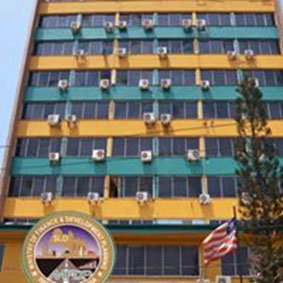
The Ministry of Finance and Development Planning (MFDP) has come under intense scrutiny after an explosive audit revealed that it ‘unlawfully withheld millions of dollars from the University of Liberia (UL), pushing the country’s flagship institution to the brink of collapse.
The 2024 General Auditing Commission (GAC) report found that UL was shortchanged by US$2.6 million from its legislatively approved budget, a violation of the Public Financial Management (PFM) Act.
The findings suggest a deliberate manipulation of national resources, and a troubling disregard for legislative authority.
UL President, Dr. Layli Maparyan, described condition at the university as a “national disgrace.”
She said UL urgently requires US$3.9 million to rehabilitate dilapidated facilities and an additional US$300,000 to repair non-functional bathrooms.
Despite requesting US$41 million, the university received only US$33 million, with a staggering 90 percent of funds consumed by salaries, leaving almost nothing for infrastructure, laboratories, libraries, or student services.
To survive, UL has been forced to undertake payroll cleanups, and enforce retirement for staff over 60 years.
Yet, critics argue these measures are mere stopgaps in the face of what appears to be a systemic pattern of financial strangulation.
The audit further exposed shocking fiscal disparities, while UL and more than 100 institutions were collectively under-funded by US$78.2 million, select agencies enjoyed unexplained financial windfalls.
The National Bureau of Concessions, for example, overspent by an alarming 42.58 percent US$373.6 million above its approved budget.
The Ministry of Public Works received US$2.3 million more than allocated, and entities like the Liberia Airport Authority, Liberia Revenue Authority, and National Food Assistance Agency, were granted unauthorized surpluses.
Auditors cautioned that such arbitrary disbursements not only distort development priorities, but also erode transparency and public trust.
Meanwhile, UL continues decay students and faculty are forced to endure collapsing classrooms, over-crowded halls, darkened libraries, and under-equipped laboratories.
For a nation where over 60 percent of the population is under 25, the neglect of higher education is being branded not just as mismanagement, but as a betrayal of it.
“This is not a mistake it is systemic,” the GAC concluded, accusing the Finance Ministry of weaponizing under-disbursements against vulnerable institutions while favoring select agencies.
Analysts argue that every dollar denied the UL is a stolen opportunity for thousands of students.
They warn that unless the Finance Ministry ends its arbitrary practices and honors legislative appropriations, the country risks sabotaging its own development by dismantling the very institution responsible for shaping its next generation of leaders.