By God gift Harris
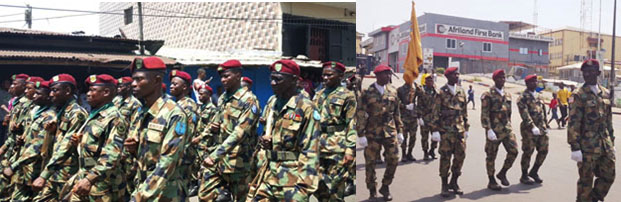
The Commander-in-Chiefvand President, Joseph Nyuma Boakai, has announced plans to recruit 600 soldiers into the Armed Forces of Liberia (AFL).
The exercise is pending between 2026 and 2029.
Pres. Boakai said government intended to revitalize the military which has already triggered questions over feasibility, financing, and national priorities.
The disclosure was made on February 11, 2026, during celebrations marking the 69th Armed Forces Day at the Barclay Training Center in Monrovia.
Pres. Boakai framed the proposed recruitment as part of a broader reform agenda aimed at modernizing the AFL.
The exercise, he said, is to address attrition, and the aging profile of the force.
“This recruitment drive is not just about numbers; it is about fashioning a force that reflects the diversity, resilience and aspirations of the people.”
However, beyond the rhetoric, critics note that the administration has provided few concrete details on how the recruitment will be financed; how new soldiers will be trained, or how the government intends to sustainably maintain an expanded force.
Liberia’s military has long grappled with chronic underfunding, limited logistics, and persistent welfare challenges conditions that raise doubts about the state capacity to effectively absorb hundreds of additional personnel.
While the government argues that a younger, and more responsive military is necessary to confront both traditional and emerging security threats
Meanwhile, analysts question whether expanding troop numerical strength should take precedence at a time when key social sectors, including health, education, and infrastructure, remain severely under-resourced.
Beyond recruitment, Boakai also pledged to improve soldiers’ welfare, announcing plans to renovate military barracks in Bomi and Maryland counties, following similar projects in Margibi and Nimba.
He acknowledged poor living conditions have long undermined morale and discipline within the AFL.
Yet, once again, no timelines or funding sources were disclosed, leaving observers uncertain whether the promised upgrades will move beyond the planning stage.
Boakai further revealed plans to establish a mental health facility at the 14 Military Hospital, with support from ECOWAS, to address trauma and psychosocial challenges affecting both soldiers and civilians.
While the initiative was presented as a progressive step, critics point out that Liberia’s broader health system remains under severe strain, raising concerns about the long-term viability of such specialized facilities.
On gender inclusion, President Boakai reiterated his administration’s commitment to increasing female participation in the AFL, citing support from the ELSIE Foundation and highlighting the appointment of Liberia’s first female Minister of National Defense.
Gender advocates have welcomed the symbolic significance of these moves, but some analysts argue that meaningful inclusion will require deeper institutional reforms, not just high-profile appointments.
The President also emphasized regional and international partnerships, publicly thanking Nigeria and the United States for their continued support to Liberia’s military.
Critics, however, caution that heavy reliance on external partners underscores Liberia’s limited domestic capacity to independently finance and develop its security sector, raising questions about long-term sovereignty in defense . Pres. Boakai called on Liberians to support the Armed Forces, describing them as guardians of national sovereignty and democracy.
The Armed Forces Day ceremony was attended by senior government officials, traditional leaders, joint security chiefs and representatives of international partners, including United States military personnel, alongside local and international soldiers.