The credibility of the Environmental Protection Agency (EPA) has come under intense public scrutiny.
This situation followed the release of an independent investigation that challenges the Agency’s earlier conclusions regarding the January 18, hydrochloric acid spill.
The spill involved MNG Gold Liberia in Money Sweet Town, Bong County.
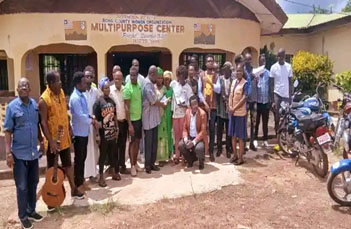
The report, presented recently at the Gbarnga Women’s Center, paints a far more troubling picture than the one previously offered by regulators. While the EPA had assured the public that the spill posed no long-term threat to human health or the environment, independent investigators found evidence suggesting significant health, environmental and economic impacts on affected residents.
According to the findings, community members reported respiratory complications, skin irritations, eye problems, gastrointestinal illnesses, and neurological symptoms consistent with hydrochloric acid exposure.
Investigators concluded that delayed warnings, inadequate protective measures, and weak emergency response efforts increased the community’s exposure to the hazardous chemical.
The report also raises concerns about possible soil and groundwater contamination.
It warns that the spill may have lasting consequences for a farming community heavily dependent on agriculture for survival.
Researchers noted that more than two-thirds of affected residents are subsistence farmers whose livelihoods were disrupted in he aftermath of the incident.
Perhaps most damaging is the growing public distrust directed at both MNG Gold Liberia and the EPA.
Residents accused the company and government authorities of failing to provide transparency, accountability, and adequate support in the wake of the spill.
The independent findings have reignited calls for accountability and raised serious questions about whether regulators acted too quickly in dismissing concerns raised by residents.
For many in Money Sweet Town, the report confirms what they have argued for months: that the true impact of the acid spill was underestimated, while the voices of affected inhabitants were ignored.