By Godgift Harris
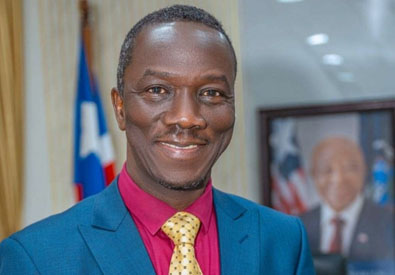
Former Mines and Energy Minister, Wilmot Paye, has denounced the annual celebration of November 29, as national holiday.
Mr. Paye said, the birthday of former President William V.S. Tubman as “a waste of time, and an unhealthy glorification of a leader, whose legacy, remains deeply troubling.”
Paye, who spoke with unusual candor, questioned why the country continues to honor Tubman?
He said Tubman’s nearly three-decade rule was marked by “authoritarianism, wasted economic potential, and the seeds of future national instability.”
Paye insists that Tubman’s long presidency was made possible only, “because he abolished presidential term limits, reversing a democratic tradition upheld even by his predecessor, Edwin Barclay, who refused to seek a third term in 1944.”
“Tubman aggressively suppressed dissent, and sought term after term.”
Paye argued: “Had Tubman not died in 1971, he could have extended his rule well into the 1980s.”
Political analysts say Tubman’s centralization of power, elimination of political competition, and the creation of a climate of fear contributed to tensions that exploded after his death.
Paye’s criticism extends beyond politics to economics, he contends that “Tubman squandered unprecedented opportunities to modernize Liberia during a period when other African nations were rapidly industrializing.”
He compared Liberia’s stagnation under Tubman to the ambitious development agenda of Kwame Nkrumah’s of Ghana, which in the same period, built the Akosombo Dam, launched strategic five-year development plans, expanded tertiary education, and invested heavily in science, technology and industrial capacity.
“While Ghana was preparing for the 21st century, Tubman was pre-occupied with lavish travels, and personal comforts,” Paye said, referencing accounts of the president’s extravagant lifestyle, including ceremonial voyages where he was reportedly carried ashore by men on shoulders, while smoking cigars.
Paye also pointed to staggering disparities in wealth and infrastructure development during the Tubman administration.
He noted that in the 1960s, one mile of paved road cost about US$25,000, but Liberia still lacked significant national road networks.
He cited a controversial claim that Tubman’s widow, Antoinette, inherited approximately US$420 million after his death; an amount, Paye says could have funded over 10,000 miles of paved roads.
“Had Tubman prioritized the country over himself, Liberia would not today be celebrating a few miles of road as national achievements.”
Paye argues that Tubman’s authoritarian rule merely postponed unrest rather than preventing it.
He said the former president kept a small, underpaid army loyal primarily to ruling elites, while brutally suppressing political opposition.
“This created a volatile environment that contributed to the 1979 Rice Riot; the 1980 coup d’état, and eventually the 14-long year civil war. Liberia’s tragedies did not emerge overnight. They were rooted in decades of political exclusion and unchecked power.”
With these criticisms, Paye questioned the relevance of maintaining a national holiday for Tubman, which he described as a waste of time and energy to improve the economy.
“In all honesty, celebrating him makes no sense when we reflect on the enormous opportunities he wasted. It is time for Liberia to stop idolizing a figure whose leadership derailed our progress.”
Paye’s remarks have sparked renewed public discussions about Liberia’s historical memory; the value of national holidays, and the importance of confronting uncomfortable truths about past leaders.
Whether the government will consider revisiting the November 29 holiday, remains uncertain, but Paye’s statement has undeniably reopened a national conversation long buried beneath tradition.